




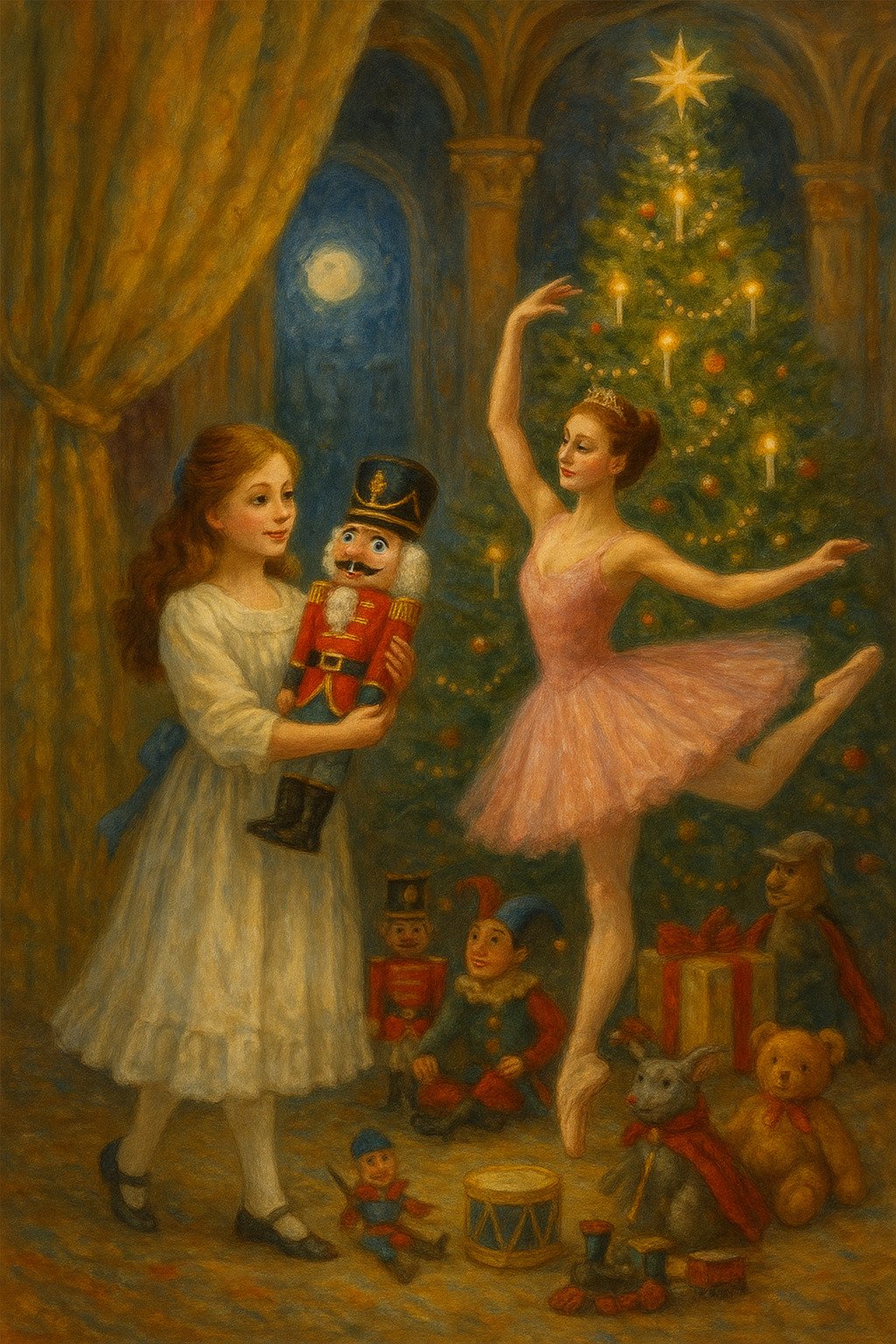
TCHAIKOVSKY’S NUTCRACKER
The ballet Tchaikovsky’s Nutcracker stands among the most enduring works in Western music history, combining fantasy, lyricism, and orchestral brilliance into a coherent dramatic experience. First premiered in 1892 at the Mariinsky Theatre, the work reflects late-Romantic aesthetics and a refined sense of musical storytelling. Moreover, its music communicates emotion with remarkable clarity and balance, allowing listeners to connect instantly with its atmosphere. This expressive accessibility explains the lasting presence of Tchaikovsky’s Nutcracker in concert halls and theaters worldwide, especially during winter celebrations.
Narrative Structure
The dramatic design of Tchaikovsky’s Nutcracker unfolds through a dreamlike transformation that moves naturally from reality into imagination. The story follows Clara, whose familiar domestic world shifts into a realm of fantasy and symbolic meaning. Initially, the household setting establishes warmth and security, grounding the listener emotionally. Then, tension appears through the battle with the Mouse King, representing conflict and fear. Afterward, the narrative expands into the Kingdom of Sweets, where celebration replaces danger and wonder overcomes anxiety. This progression reflects psychological growth and imaginative escape, allowing Tchaikovsky’s Nutcracker to resonate with both children and adults.
Orchestral Language in Tchaikovsky’s Nutcracker
The orchestration in Tchaikovsky’s Nutcracker demonstrates exceptional color, balance, and precision. Tchaikovsky employs instrumental contrast to define characters, locations, and emotional states with clarity. Notably, the introduction of the celesta creates a shimmering texture unfamiliar to many audiences of the time, shaping the magical identity of the Sugar Plum Fairy. Additionally, dance forms inspired by various cultures receive distinctive rhythmic treatments, ensuring that each musical number feels unique. As a result, the score of Tchaikovsky’s Nutcracker remains approachable while preserving remarkable compositional sophistication.
Cultural Impact
Over time, Tchaikovsky’s Nutcracker evolved into a global cultural tradition, particularly associated with winter and holiday celebrations. This connection strengthened during the twentieth century, especially in North America, where annual performances became customary. Through this tradition, the ballet introduced classical dance to broader audiences and families. Furthermore, productions often involve students and young performers, reinforcing its educational value. Thus, Tchaikovsky’s Nutcracker functions simultaneously as refined art and communal ritual, a balance rarely achieved by classical works.
Artistic Legacy of Tchaikovsky’s Nutcracker
The artistic influence of Tchaikovsky’s Nutcracker extends far beyond the ballet stage. Its music appears frequently in film, animation, and popular media, reinforcing its familiarity across cultures. However, its enduring strength lies in emotional accessibility, as listeners instantly recognize its melodies and moods. At the same time, musicians and scholars admire its structural clarity and orchestral craftsmanship. This balance sustains the relevance of Tchaikovsky’s Nutcracker across generations and secures its place within the classical canon.
In conclusion, Tchaikovsky’s Nutcracker endures through imagination, narrative clarity, and musical invention. Its success depends not on complexity alone, but on emotional honesty and expressive balance. By uniting charm, symbolism, and orchestral mastery, the ballet transcends its historical context. Therefore, Tchaikovsky’s Nutcracker continues to inspire performers, audiences, and composers worldwide, remaining timeless because it speaks directly to human wonder and memory.
