


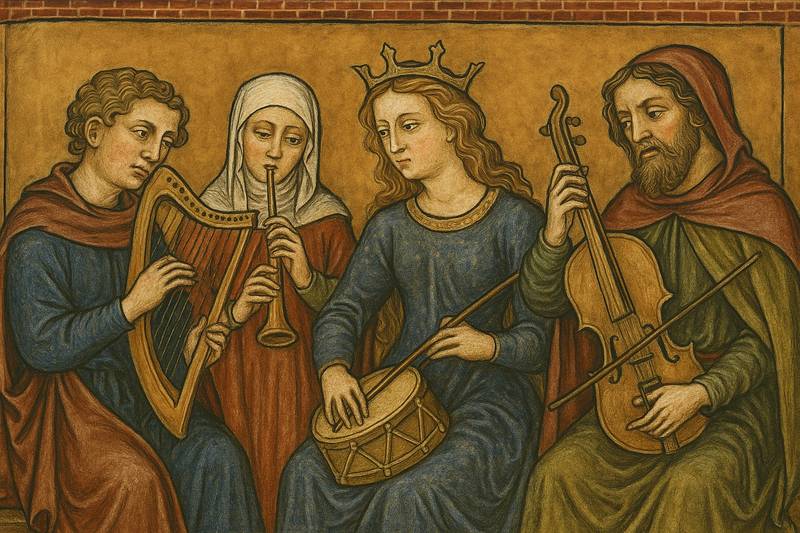
• IMAGEN DE LA MUSICA MEDIEVAL DE LOS PERIODOS DE LA MUSICA CLASICA

    THE MAIN PERIODS OF CLASSICAL MUSIC

    The main periods of classical music begin with Medieval music, emerging after the fall of the Western Roman Empire around 476 CE. During this era, sacred traditions dominated musical creation. Gregorian chant, formalized between the 9th and 10th centuries, became the foundation of Western liturgical music. As a result, monophonic textures emphasized spiritual clarity and textual intelligibility. Gradually, early polyphony appeared at Notre Dame in Paris during the 12th century, marking a structural transformation. Therefore, rhythmic notation and modal organization established the earliest theoretical systems.

    Renaissance Balance and Humanism (c. 1400–1600)

    During the Renaissance, music reflect humanist ideals inspired by classical antiquity. Composers such as Josquin des Prez (c.1450–1521) developed imitative polyphony, creating balanced textures and expressive clarity. Consequently, sacred and secular music flourished equally across Europe. The invention of music printing by Ottaviano Petrucci in 1501 accelerated stylistic unity. Moreover, harmony became smoother through controlled dissonance. Thus, Renaissance music reinforced proportional beauty and vocal expressiveness.

    The Main Periods of Classical Music: Baroque Innovation and Expression (c. 1600–1750)

    The Baroque period represents one of the most transformative stages. Beginning around 1600, composers sought emotional intensity and dramatic contrast. Opera emerged in Florence circa 1600, blending music, theater, and poetry. Meanwhile, Johann Sebastian Bach (1685–1750) perfected counterpoint, while George Frideric Handel (1685–1759) expanded large-scale vocal forms. As a result, basso continuo and functional harmony became central. Therefore, the Baroque era solidified tonal organization, shaping future developments.

    Classical Clarity and Form (c. 1750–1820)

    The Classical period emphasizes balance, transparency, and formal clarity within the main periods of classical music. Around 1750, musical language simplified, favoring homophonic textures. Joseph Haydn (1732–1809) standardized the symphony and string quartet, while Wolfgang Amadeus Mozart (1756–1791) perfected melodic elegance. Later, Ludwig van Beethoven (1770–1827) expanded structural boundaries. Consequently, sonata form became the dominant organizational model. Thus, rational structure and expressive restraint defined this central stage.

    The Main Periods of Classical Music: Romantic Expansion and Individualism (c. 1820–1900)

    The Romantic era transformed the main periods of classical music through emotional depth and personal expression. After 1820, composers emphasized individuality, nationalism, and expanded harmonic language. Franz Schubert (1797–1828) elevated the art song, while Frédéric Chopin (1810–1849) redefined piano expression. Additionally, orchestras grew significantly in size. Therefore, tone poems and programmatic music flourished. Romanticism prioritized subjective experience, marking a profound emotional evolution.

    Late Romanticism and Transition (c. 1880–1910)

    Late Romanticism represents a transitional phase. Composers such as Richard Wagner (1813–1883) pushed tonal harmony toward chromatic extremes. Meanwhile, Gustav Mahler (1860–1911) expanded symphonic scale and philosophical depth. Consequently, traditional tonality faced structural tension. Therefore, this period bridges Romantic expressiveness and modern experimentation. It prepares the aesthetic shift that defines the next chapter of the main periods of classical music.

    The Main Periods of Classical Music: Modernism and New Languages (c. 1900–1975)

    Modernism redefined the main periods of classical music through innovation and rupture. Beginning around 1900, composers rejected Romantic excess. Claude Debussy (1862–1918) explored impressionistic color, while Arnold Schoenberg (1874–1951) developed atonality and twelve-tone technique in the 1920s. As a result, rhythm, timbre, and form gained autonomy. Moreover, composers like Stravinsky challenged traditional pulse. Thus, Modernism fragmented musical language within the main periods of classical music.

    Contemporary Diversity (c. 1975–Present)

    The contemporary era reflects pluralism. After 1975, composers embraced stylistic coexistence. Minimalism, led by Steve Reich (born 1936) and Philip Glass (born 1937), emphasized repetition and clarity. Meanwhile, film music expanded classical techniques into global media. Therefore, boundaries between genres softened. Contemporary music values accessibility and innovation equally. Consequently, this period completes the evolving narrative of the main periods of classical music.

    The Main Periods of Classical Music: Historical Continuity and Impact

    Overall, the main periods of classical music demonstrate a continuous dialogue between tradition and innovation. Each era responds to social, philosophical, and technological change. From Medieval chant to contemporary minimalism, structural principles evolve without losing historical roots. Therefore, understanding the main periods of classical music clarifies how Western musical language developed coherently across centuries. This historical continuity explains their enduring educational, cultural, and artistic relevance worldwide.
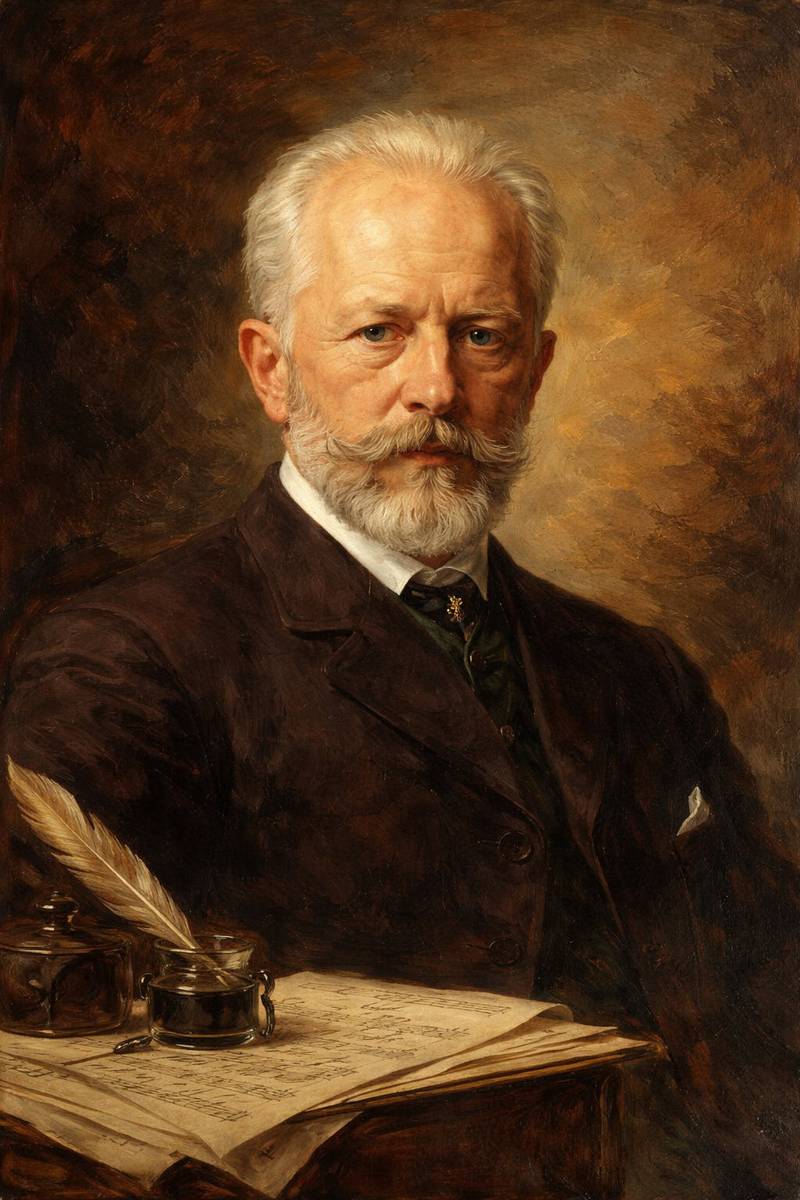
  • IMAGEN DE PIOTR ILICH CHAIKOVSKI

    PIOTR ILICH CHAIKOVSKI (English)

    Piotr Ilich Chaikovski was born on 7 May 1840 in Votkinsk, within the Russian Empire. He demonstrated an early inclination toward music during childhood. However, his initial education followed the expectations of Russian society, which favored civil service careers. Consequently, he entered the Imperial School of Jurisprudence in Saint Petersburg. This early path delayed, but did not suppress, his artistic vocation. After completing legal studies, he briefly worked as a government clerk before pursuing music professionally.

    Piotr Ilich Chaikovski and Academic Musical Training

    In 1862Piotr Ilich Chaikovski enrolled in the newly founded Saint Petersburg Conservatory, marking a decisive shift in his life. The conservatory represented the first institutional framework for advanced musical education in Russia. There, he studied harmony, counterpoint, fugue, and orchestration within a structured academic system. His training occurred under the institutional leadership of Anton Rubinstein, a central figure in Russian musical education. As a result, he developed technical discipline grounded in Western compositional models. In 1866, he accepted a teaching position at the Moscow Conservatory, beginning his professional consolidation.

    Piotr Ilich Chaikovski: Musical Style and Artistic Identity

    The music of Piotr Ilich Chaikovski is defined by emotional intensity, melodic clarity, and refined harmonic language. Unlike members of nationalist circles, he employed Western formal structures, integrating them with Russian expressive character. Moreover, his works emphasize psychological drama, aligning with late Romantic aesthetics. Therefore, his compositions communicate directly with listeners across cultural boundaries. Emotional transparency and formal control coexist within his musical voice, establishing his international recognition during his lifetime.

    Piotr Ilich Chaikovski and Major Compositional Works

    Among the most significant works of Piotr Ilich Chaikovski are his six symphonies, particularly the Symphony No. 6 “Pathétique”, premiered in 1893. Additionally, he composed the Piano Concerto No. 1 in 1875, which became a cornerstone of the concert repertoire. His contribution to ballet proved transformative through Swan Lake (1877), The Sleeping Beauty (1890), and The Nutcracker (1892). These works expanded the expressive role of orchestral music within ballet narratives, shaping modern ballet tradition.

    Piotr Ilich Chaikovski: Opera, Vocal Music, and Personal Life

    Opera occupied a central place in the output of Piotr Ilich Chaikovski, especially Eugene Onegin (1879) and The Queen of Spades (1890). These operas demonstrate sophisticated dramatic construction and psychological depth. In parallel, he composed numerous songs and choral works that reflect careful text setting. His personal life included significant emotional strain. His marriage in 1877 was brief and destabilizing. Later, financial support from Nadezhda von Meck enabled creative independence through extensive correspondence, though they never met.

    Piotr Ilich Chaikovski: Final Years, Death, and Legacy

    During his final years, Piotr Ilich Chaikovski achieved substantial international recognition. He conducted his works throughout Europe and the United States, reinforcing his global stature. He died on 6 November 1893 in Saint Petersburg at the age of 53. Historical debate continues regarding the precise cause of death. Nevertheless, his influence remains enduring. His music shaped late Romantic symphonic development and remains central to modern concert life. Piotr Ilich Chaikovski represents a lasting synthesis of formal structure and emotional expression, securing his position within Western musical history.

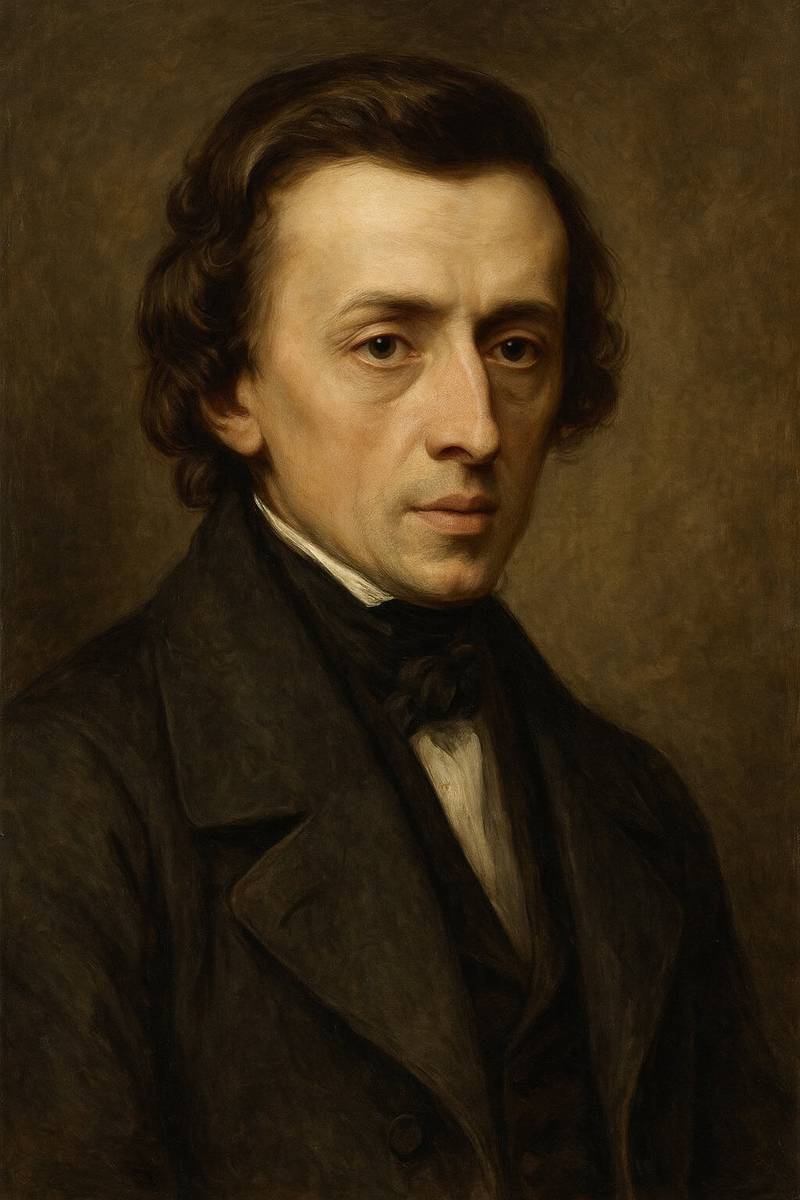
  • IMAGEN DE FREDERIC CHOPIN.

    FREDERIC CHOPIN (English)

    Frédéric Chopin was born on March 1, 1810, in Żelazowa Wola, near Warsaw, then part of the Duchy of Warsaw. He was a Polish composer and pianist whose work permanently transformed piano music. From early childhood, Frédéric Chopin displayed extraordinary musical sensitivity and intellectual refinement. His father, Nicolas Chopin, was a French-born educator, while his mother, Justyna Krzyżanowska, nurtured his first musical experiences. This cultivated family environment strongly shaped his artistic identity.

    By the age of seven, Chopin was already composing polonaises, and at eight, he appeared in public concerts. He studied composition with Józef Elsner at the Warsaw Conservatory, where his teacher described him as a musical genius. These formative years established Frédéric Chopin as a prodigious talent within Polish musical circles.

    Frédéric Chopin and the Political Climate of Poland

    The youth of Frédéric Chopin unfolded during political unrest in Poland under Russian control. In 1830, shortly before the November Uprising, Chopin left Warsaw. Although intended as a temporary journey, exile became permanent. This separation from his homeland deeply influenced his emotional world. Polish identity, nostalgia, and longing became defining elements of his music.

    In 1831, Frédéric Chopin settled in Paris, Europe’s cultural capital. There, he entered artistic circles that included Franz Liszt, Hector Berlioz, and Eugène Delacroix. However, Chopin avoided public virtuosity and cultivated a refined, introspective musical voice. His works reflected emotional depth rather than technical spectacle, aligning him with the core ideals of Romanticism.

    Frédéric Chopin: Musical Style and Piano Innovation

    The artistic language of Frédéric Chopin revolutionized piano composition. He wrote almost exclusively for the piano, transforming it into a vehicle of lyrical and psychological expression. His output includes Nocturnes, Études, Preludes, Ballades, Scherzi, Mazurkas, and Polonaises, each redefining expressive and technical boundaries.

    Frédéric Chopin introduced advanced harmonic language, subtle chromaticism, and innovative textures. Moreover, he developed a sophisticated use of rubato, allowing melodic freedom while preserving rhythmic structure. This approach demanded sensitivity rather than force. His pianistic writing influenced later composers, including Claude Debussy, Maurice Ravel, and Alexander Scriabin, securing his position as a cornerstone of piano literature.

    Frédéric Chopin and His Parisian Life

    In Paris, Frédéric Chopin earned his living primarily as a private piano teacher, composer, and salon musician. He preferred intimate performances over large concert halls, partly due to his reserved personality and fragile health. His refined manners and intellectual elegance made him highly respected among aristocratic patrons.

    Between 1838 and 1847, Chopin maintained a complex relationship with the writer George Sand. Their time together was both creatively productive and emotionally challenging. During the winter of 1838–1839, Chopin stayed in Mallorca, where he composed several major works, including the Preludes, Op. 28. Unfortunately, the damp climate worsened his illness. Tuberculosis increasingly limited his physical strength, affecting his productivity in later years.

    Frédéric Chopin: Final Years and Death

    During the 1840s, the health of Frédéric Chopin declined steadily. Nevertheless, he continued teaching and composing select works marked by introspection and restraint. In 1848, he undertook a demanding tour of England and Scotland, giving private concerts to aristocratic audiences. This journey severely weakened him.

    Frédéric Chopin died in Paris on October 17, 1849, at the age of 39. His funeral was held at the Church of the Madeleine, featuring music by Wolfgang Amadeus Mozart, as he had requested. In accordance with his wishes, his heart was transported to Warsaw, where it remains preserved as a national symbol.

    Historical Legacy of Frédéric Chopin

    The legacy of Frédéric Chopin remains central to Western musical history. His compositions embody the essence of Romanticism, merging poetic intimacy with technical sophistication. Every performance of his music demands emotional intelligence, stylistic awareness, and refined control.

    Today, Frédéric Chopin is universally regarded as one of the most influential composers of the nineteenth century. His piano works form a foundational part of the global repertoire and continue to inspire performers and audiences worldwide. His music transcends time, expressing personal emotion while achieving universal resonance, ensuring his enduring relevance across generations.

  • IMAGEN DE FREDERIC CHOPIN.

    FREDERIC CHOPIN

    Frédéric Chopin nació el 1 de marzo de 1810 en Żelazowa Wola, cerca de Varsovia, entonces parte del Ducado de Varsovia. Fue un compositor y pianista polaco que transformó profundamente la escritura para piano. Desde la infancia, Frédéric Chopin mostró un talento excepcional, unido a una sensibilidad artística poco común. Su padre, Nicolas Chopin, profesor de origen francés, y su madre, Justyna Krzyżanowska, fomentaron una educación intelectual y musical sólida. Este entorno familiar resultó decisivo para su desarrollo artístico temprano. Durante sus primeros años, Frédéric Chopin recibió formación formal en Varsovia y estudió composición con Józef Elsner, quien reconoció públicamente su genio creativo. A los 7 años ya componía polonesas, y a los 8 años ofrecía conciertos públicos, consolidando su reputación como niño prodigio en Polonia.

    Frédéric Chopin y el contexto histórico-político

    La juventud de Frédéric Chopin coincidió con un período de gran inestabilidad política en Polonia. En 1830, poco antes del Levantamiento de Noviembre contra el dominio ruso, abandonó Varsovia. Aunque nunca regresó a su patria, el exilio marcó de forma permanente su identidad artística. La nostalgia, el sentimiento nacional y la melancolía se convirtieron en rasgos expresivos esenciales de su lenguaje musical. En 1831, Frédéric Chopin se estableció definitivamente en París, uno de los centros culturales más influyentes de Europa. Allí entró en contacto con figuras como Franz Liszt, Hector Berlioz y Eugène Delacroix, aunque mantuvo siempre una estética íntima y personal, alejada del virtuosismo teatral dominante. Su música reflejó una profundidad emocional singular, propia del Romanticismo más introspectivo.

    Frédéric Chopin: estilo musical y aportes al piano

    El estilo de Frédéric Chopin redefinió las posibilidades técnicas y expresivas del piano. Compuso casi exclusivamente para este instrumento, elevándolo a un medio de expresión lírica, poética y psicológica sin precedentes. Obras como los Nocturnos, Estudios, Baladas, Scherzi, Mazurcas y Polonesas destacan por su originalidad armónica, su libertad formal y su refinamiento estilístico. Además, Frédéric Chopin revolucionó la técnica pianística mediante el uso avanzado del rubato, la independencia de las manos y una escritura idiomática profundamente natural. Su enfoque priorizó el canto melódico y la sutileza expresiva, influyendo decisivamente en compositores posteriores como Debussy, Ravel y Scriabin, quienes reconocieron su herencia estética.

    Frédéric Chopin y su vida personal en París

    En París, Frédéric Chopin desarrolló una vida profesional basada en la enseñanza privada, la composición y la participación en salones aristocráticos e intelectuales. Prefería estos espacios íntimos a los grandes auditorios, tanto por su carácter reservado como por su frágil salud. Entre 1838 y 1847, mantuvo una relación compleja con la escritora George Sand, quien influyó notablemente en su estabilidad emocional y producción artística. Durante el invierno de 1838–1839, Chopin residió en Mallorca, donde compuso parte de sus Preludios, Op. 28, una de sus obras más influyentes. Sin embargo, su estado de salud empeoró considerablemente, y la tuberculosis condicionó de forma progresiva su actividad creativa.

    Frédéric Chopin: últimos años y muerte

    Durante la década de 1840, la salud de Frédéric Chopin se deterioró de manera constante. A pesar de ello, continuó componiendo y enseñando, aunque con menor frecuencia. En 1848, realizó su último viaje a Inglaterra y Escocia, donde ofreció conciertos selectos que exigieron un esfuerzo físico significativo. Este viaje agravó su enfermedad. Finalmente, Frédéric Chopin falleció en París el 17 de octubre de 1849, a los 39 años. Su funeral tuvo lugar en la Iglesia de la Madeleine, con música de Mozart, cumpliendo su deseo expreso. Según su voluntad, su corazón fue trasladado a Varsovia, donde permanece como símbolo nacional.

    Legado histórico de Frédéric Chopin

    El legado de Frédéric Chopin sigue siendo fundamental en la historia de la música occidental. Su obra encarna la esencia del Romanticismo, combinando técnica refinada, profundidad emocional y elegancia formal. Cada interpretación de su música exige introspección, control técnico y sensibilidad estilística avanzada. Hoy, Frédéric Chopin es reconocido como uno de los compositores más influyentes del siglo XIX, y su repertorio continúa siendo un pilar central de la literatura pianística mundial. Su música trasciende el tiempo, conectando la experiencia íntima del compositor con una universalidad expresiva que garantiza su vigencia permanente.

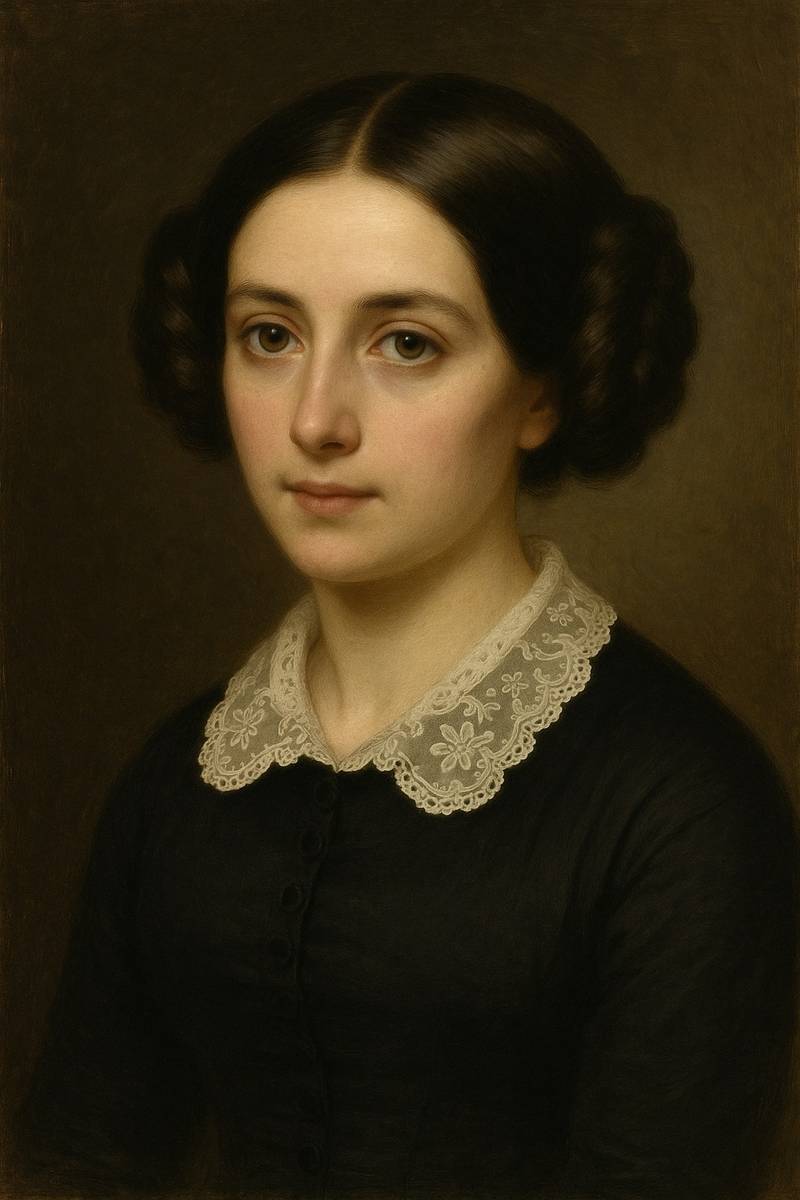
  • IMAGEN DE LOUISE FARRENC

    LOUISE FARRENC (English)

    LOUISE FARRENC was born on May 31, 1804, in Paris, France, into a family closely connected to the arts. From childhood, she displayed exceptional musical sensitivity and intellectual discipline. As a result, her cultural environment strongly influenced her artistic development and long-term vision.

    She began formal piano studies with Cécile Soria, a former student of Muzio Clementi. Later, she studied composition privately with Anton Reicha, an influential Classical theorist. Through this rigorous education, she achieved mastery of counterpoint, harmonic logic, and formal balance.

    At that time, institutional composition training was largely denied to women. Nevertheless, LOUISE FARRENC continued advanced studies independently, demonstrating determination and technical ambition. Consequently, her early works already reflected structural confidence and stylistic maturity.

    Professional Career and Artistic Consolidation

    In 1821, she married flutist and music publisher Aristide Farrenc, who became an essential professional collaborator. Together, they founded Éditions Farrenc, a publishing house devoted to high-quality classical repertoire. Therefore, her music gained increased visibility in Parisian artistic circles.

    During the 1830s, Farrenc established herself as a respected pianist, composer, and pedagogue. Her works were frequently performed and praised for expressive restraint and architectural strength. Moreover, her professional reputation extended beyond France.

    In 1842, she achieved a historic milestone by becoming Professor of Piano at the Paris Conservatoire. She held this prestigious post for over thirty years. Thus, she became one of the most influential female educators of the nineteenth century.

    LOUISE FARRENC and Artistic Recognition

    Despite her accomplishments, she initially received lower pay than male colleagues. However, she firmly defended professional equality through sustained excellence. Eventually, she secured equal salary, establishing a lasting institutional precedent.

    This achievement confirmed her authority within one of Europe’s most conservative musical institutions. Furthermore, LOUISE FARRENC demonstrated that women could excel in roles traditionally reserved for men. Her success directly challenged entrenched gender norms.

    Beyond pedagogy, she earned recognition as a serious composer capable of large-scale forms. Consequently, she expanded creative possibilities for women within the Romantic tradition.

    Musical Language and Compositional Style

    Her music is defined by formal clarity, disciplined craftsmanship, and expressive balance. It reflects Classical influences from Haydn, Mozart, and Beethoven, combined with Romantic lyricism. Therefore, emotional depth coexists with structural coherence.

    She composed three symphonies, extensive chamber works, and refined piano pieces. These genres demanded technical authority and intellectual control. Her command of counterpoint ensured stability even in moments of heightened expression.

    Because of this synthesis, Farrenc occupies a distinctive place within French Romanticism. Her style avoids excess, favoring proportion, motivic development, and elegant orchestration.

    LOUISE FARRENC as Scholar and Editor

    Beyond composition, she made a lasting scholarly contribution. Between 1861 and 1876, she co-edited “Le Trésor des pianistes”, a monumental anthology of keyboard music spanning the Renaissance to the nineteenth century.

    This publication became an essential pedagogical reference throughout Europe. Consequently, her historical vision strengthened her intellectual legacy. It also reinforced her authority in piano education and musicology.

    Through this editorial work, LOUISE FARRENC preserved significant repertoire while shaping modern keyboard pedagogy. Her scholarly rigor matched her compositional discipline.

    Final Years and Enduring Legacy

    She died on September 15, 1875, in Paris, leaving a substantial and coherent body of work. After her death, much of her music disappeared from concert programs, largely due to gender bias.

    However, since the late twentieth century, her compositions have been rediscovered and widely performed. Today, recordings and research continue restoring her historical significance. As a result, her reputation continues to grow.

    Her legacy represents artistic excellence, intellectual integrity, and cultural resilience. In conclusion, her life demonstrates that disciplined talent transcends social limitations when guided by vision, rigor, and perseverance.