



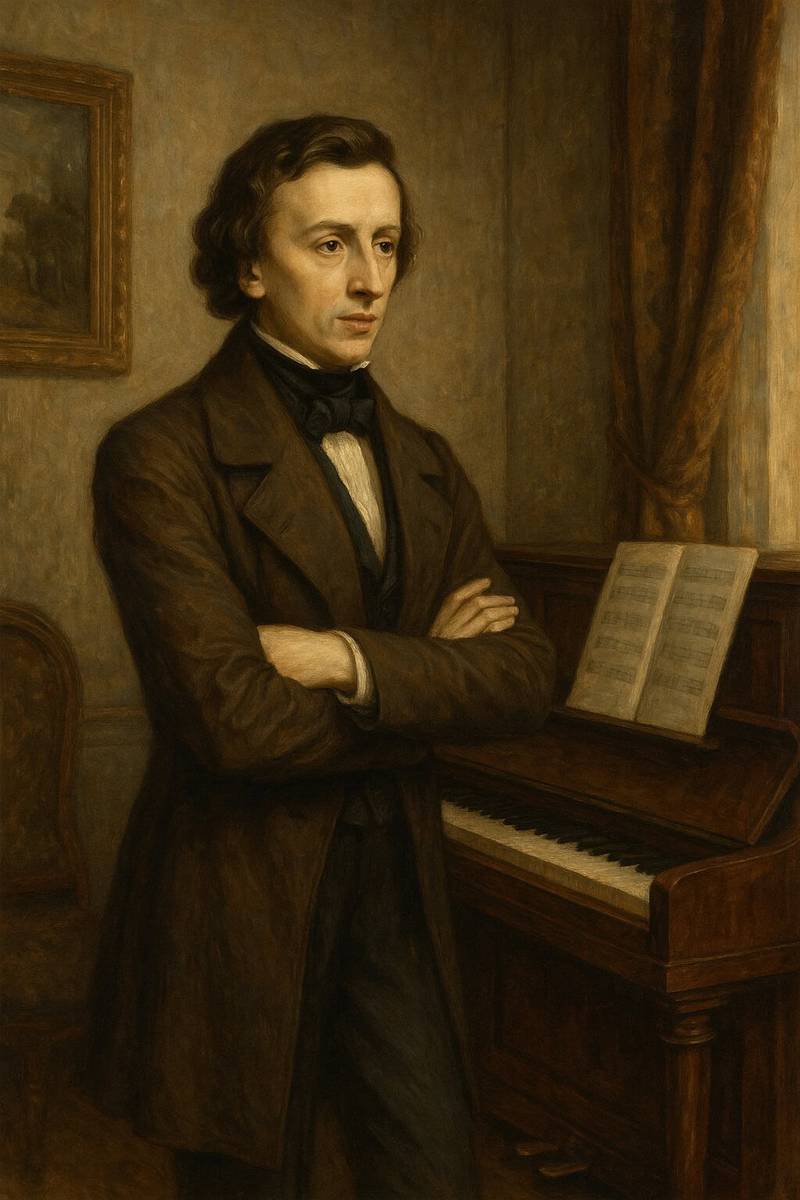
• LA IMAGEN MUESTRA A CHOPIN JOVEN A UN LADO DE UN PIANO. TECNICA PIANISTICA DE CHOPIN.

    THE PIANISTIC TECHNIQUE OF CHOPIN

    The Pianistic Technique of Chopin represents one of the most refined approaches of musical Romanticism, as it transformed the piano into a deeply expressive and emotionally flexible instrument. Moreover, it established essential technical principles applicable to performers at all levels, using the keyboard as a means to develop an intimate musical language. Likewise, it integrated melodic, harmonic, and gestural elements that defined its pianistic aesthetic, consistently prioritizing expression over mechanical display and superficial virtuosity.

    The Pianistic Technique of Chopin: expressive foundations

    The Pianistic Technique of Chopin arises from a vocal conception of the piano, understood as a direct extension of the human voice. For this reason, the composer prioritized legato cantabile over any rigid articulation. Unlike purely mechanical methods, this approach seeks naturalness, economy of movement, and expressive coherence, in which every technical gesture fulfills a clear musical function and fingering remains subordinate to musical phrasing.

    Arm relaxation and natural movement

    One of the essential pillars of Chopin’s technique is conscious muscular relaxation. Chopin recommended free, tensionless movements, insisting on the natural control of arm weight as the primary source of sound. This approach allows for a warm, flexible, and balanced sonority, avoids unnecessary rigidity, and supports the construction of long, continuous phrases, relying on controlled gravity rather than muscular force.

    The role of the finger as a source of tonal clarity

    Within this technical system, the fingers play a fundamental role. Chopin promoted finger independence without excessively lifting the fingers from the keyboard, always seeking close contact and minimal movement. This principle ensures precision, dynamic control, and tonal uniformity, while also facilitating the execution of rapid passages without harshness of sound, producing clear, clean, and well-defined melodic lines.

    The Pianistic Technique of Chopin and legato cantabile

    Legato cantabile constitutes the central expressive foundation, as it imitates the human voice through smooth transitions, dynamic control, and constant attention to phrasing. Each musical line requires a balance between pressure, speed, and musical direction, making melodic continuity an absolute priority. This approach transforms the piano into a lyrically profound instrument, where each note is perceived as part of a living, organic phrase.

    Flexible use of rubato as an expressive resource

    Rubato occupies a fundamental place within Chopin’s interpretive aesthetic. This resource allows slight temporal variations without altering the underlying pulse, granting emotional freedom in moments of high expressive intensity. It also requires precise coordination between the hands, with the left hand maintaining rhythmic stability while the right hand unfolds with expressive flexibility. Chopinian rubato is not arbitrary; rather, it is a manifestation of refined sensitivity and structural control.

    Pedal technique and control of harmonic color

    The pedal plays a central role within the Pianistic Technique of Chopin, as it is used as a tool for tonal color rather than mere prolongation. Chopin employed transparent pedalings to enrich the sound without obscuring articulation or harmonic clarity. In addition, he explored harmonic colors and subtle resonances through precise changes, shaping delicate atmospheres that profoundly influenced twentieth-century pianistic schools.

    Ornamentation, articulation, and poetic detail

    Chopin’s writing includes stylized ornamentation that demands clarity, elegance, and control. Grace notes must sound light, well integrated, and directionally clear within the phrase. Likewise, accents and dynamics require a constant balance between strength and refinement, constructing a subtle and complex poetic aesthetic that is difficult to imitate without a deep understanding of style.

    The Pianistic Technique of Chopin: historical impact and legacy

    The Pianistic Technique of Chopin decisively influenced performers such as Cortot, Rubinstein, and Argerich, while also inspiring modern pianistic schools based on naturalness, expression, and bodily control. Its study remains mandatory in conservatories worldwide due to its balance between virtuosity and musicality. Consequently, this legacy endures as a lasting interpretive ideal, demanding the integration of body, ear, and emotion into a single coherent artistic voice.
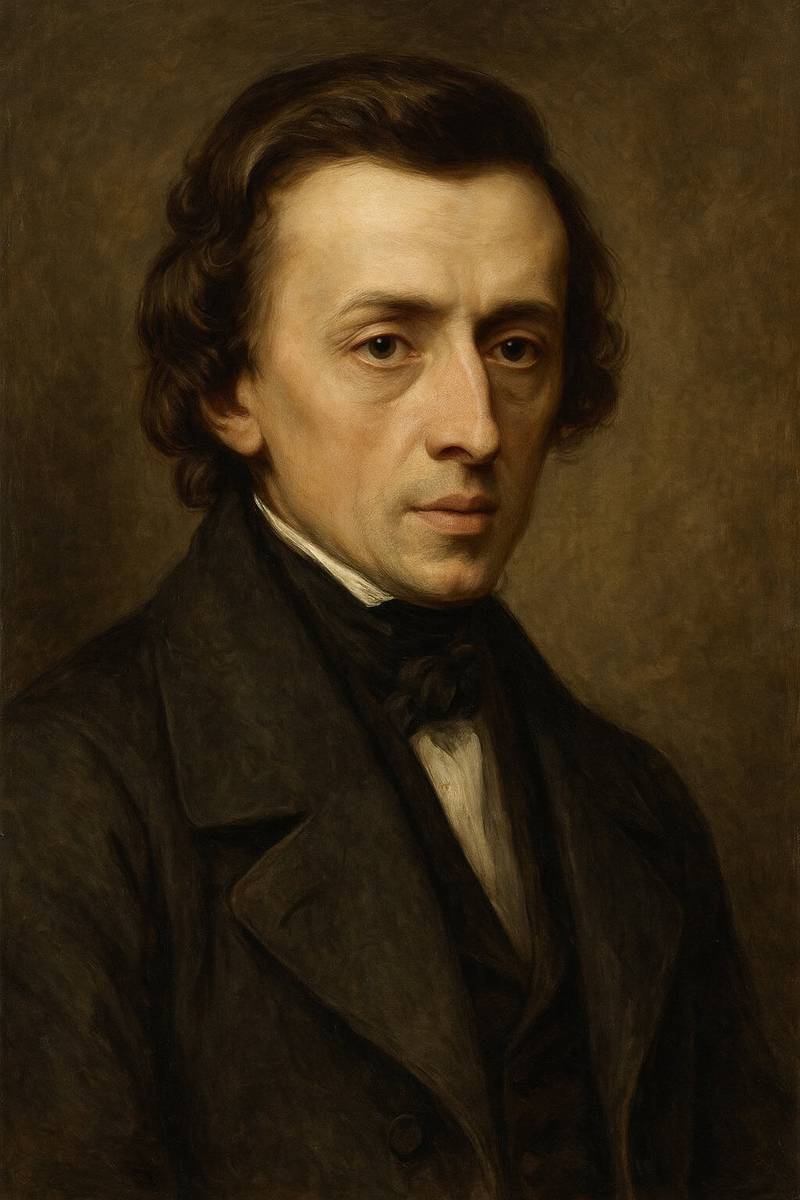
  • IMAGEN DE FREDERIC CHOPIN.

    FREDERIC CHOPIN (English)

    Frédéric Chopin was born on March 1, 1810, in Żelazowa Wola, near Warsaw, then part of the Duchy of Warsaw. He was a Polish composer and pianist whose work permanently transformed piano music. From early childhood, Frédéric Chopin displayed extraordinary musical sensitivity and intellectual refinement. His father, Nicolas Chopin, was a French-born educator, while his mother, Justyna Krzyżanowska, nurtured his first musical experiences. This cultivated family environment strongly shaped his artistic identity.

    By the age of seven, Chopin was already composing polonaises, and at eight, he appeared in public concerts. He studied composition with Józef Elsner at the Warsaw Conservatory, where his teacher described him as a musical genius. These formative years established Frédéric Chopin as a prodigious talent within Polish musical circles.

    Frédéric Chopin and the Political Climate of Poland

    The youth of Frédéric Chopin unfolded during political unrest in Poland under Russian control. In 1830, shortly before the November Uprising, Chopin left Warsaw. Although intended as a temporary journey, exile became permanent. This separation from his homeland deeply influenced his emotional world. Polish identity, nostalgia, and longing became defining elements of his music.

    In 1831, Frédéric Chopin settled in Paris, Europe’s cultural capital. There, he entered artistic circles that included Franz Liszt, Hector Berlioz, and Eugène Delacroix. However, Chopin avoided public virtuosity and cultivated a refined, introspective musical voice. His works reflected emotional depth rather than technical spectacle, aligning him with the core ideals of Romanticism.

    Frédéric Chopin: Musical Style and Piano Innovation

    The artistic language of Frédéric Chopin revolutionized piano composition. He wrote almost exclusively for the piano, transforming it into a vehicle of lyrical and psychological expression. His output includes Nocturnes, Études, Preludes, Ballades, Scherzi, Mazurkas, and Polonaises, each redefining expressive and technical boundaries.

    Frédéric Chopin introduced advanced harmonic language, subtle chromaticism, and innovative textures. Moreover, he developed a sophisticated use of rubato, allowing melodic freedom while preserving rhythmic structure. This approach demanded sensitivity rather than force. His pianistic writing influenced later composers, including Claude Debussy, Maurice Ravel, and Alexander Scriabin, securing his position as a cornerstone of piano literature.

    Frédéric Chopin and His Parisian Life

    In Paris, Frédéric Chopin earned his living primarily as a private piano teacher, composer, and salon musician. He preferred intimate performances over large concert halls, partly due to his reserved personality and fragile health. His refined manners and intellectual elegance made him highly respected among aristocratic patrons.

    Between 1838 and 1847, Chopin maintained a complex relationship with the writer George Sand. Their time together was both creatively productive and emotionally challenging. During the winter of 1838–1839, Chopin stayed in Mallorca, where he composed several major works, including the Preludes, Op. 28. Unfortunately, the damp climate worsened his illness. Tuberculosis increasingly limited his physical strength, affecting his productivity in later years.

    Frédéric Chopin: Final Years and Death

    During the 1840s, the health of Frédéric Chopin declined steadily. Nevertheless, he continued teaching and composing select works marked by introspection and restraint. In 1848, he undertook a demanding tour of England and Scotland, giving private concerts to aristocratic audiences. This journey severely weakened him.

    Frédéric Chopin died in Paris on October 17, 1849, at the age of 39. His funeral was held at the Church of the Madeleine, featuring music by Wolfgang Amadeus Mozart, as he had requested. In accordance with his wishes, his heart was transported to Warsaw, where it remains preserved as a national symbol.

    Historical Legacy of Frédéric Chopin

    The legacy of Frédéric Chopin remains central to Western musical history. His compositions embody the essence of Romanticism, merging poetic intimacy with technical sophistication. Every performance of his music demands emotional intelligence, stylistic awareness, and refined control.

    Today, Frédéric Chopin is universally regarded as one of the most influential composers of the nineteenth century. His piano works form a foundational part of the global repertoire and continue to inspire performers and audiences worldwide. His music transcends time, expressing personal emotion while achieving universal resonance, ensuring his enduring relevance across generations.

  • IMAGEN DE FREDERIC CHOPIN.

    FREDERIC CHOPIN

    Frédéric Chopin nació el 1 de marzo de 1810 en Żelazowa Wola, cerca de Varsovia, entonces parte del Ducado de Varsovia. Fue un compositor y pianista polaco que transformó profundamente la escritura para piano. Desde la infancia, Frédéric Chopin mostró un talento excepcional, unido a una sensibilidad artística poco común. Su padre, Nicolas Chopin, profesor de origen francés, y su madre, Justyna Krzyżanowska, fomentaron una educación intelectual y musical sólida. Este entorno familiar resultó decisivo para su desarrollo artístico temprano. Durante sus primeros años, Frédéric Chopin recibió formación formal en Varsovia y estudió composición con Józef Elsner, quien reconoció públicamente su genio creativo. A los 7 años ya componía polonesas, y a los 8 años ofrecía conciertos públicos, consolidando su reputación como niño prodigio en Polonia.

    Frédéric Chopin y el contexto histórico-político

    La juventud de Frédéric Chopin coincidió con un período de gran inestabilidad política en Polonia. En 1830, poco antes del Levantamiento de Noviembre contra el dominio ruso, abandonó Varsovia. Aunque nunca regresó a su patria, el exilio marcó de forma permanente su identidad artística. La nostalgia, el sentimiento nacional y la melancolía se convirtieron en rasgos expresivos esenciales de su lenguaje musical. En 1831, Frédéric Chopin se estableció definitivamente en París, uno de los centros culturales más influyentes de Europa. Allí entró en contacto con figuras como Franz Liszt, Hector Berlioz y Eugène Delacroix, aunque mantuvo siempre una estética íntima y personal, alejada del virtuosismo teatral dominante. Su música reflejó una profundidad emocional singular, propia del Romanticismo más introspectivo.

    Frédéric Chopin: estilo musical y aportes al piano

    El estilo de Frédéric Chopin redefinió las posibilidades técnicas y expresivas del piano. Compuso casi exclusivamente para este instrumento, elevándolo a un medio de expresión lírica, poética y psicológica sin precedentes. Obras como los Nocturnos, Estudios, Baladas, Scherzi, Mazurcas y Polonesas destacan por su originalidad armónica, su libertad formal y su refinamiento estilístico. Además, Frédéric Chopin revolucionó la técnica pianística mediante el uso avanzado del rubato, la independencia de las manos y una escritura idiomática profundamente natural. Su enfoque priorizó el canto melódico y la sutileza expresiva, influyendo decisivamente en compositores posteriores como Debussy, Ravel y Scriabin, quienes reconocieron su herencia estética.

    Frédéric Chopin y su vida personal en París

    En París, Frédéric Chopin desarrolló una vida profesional basada en la enseñanza privada, la composición y la participación en salones aristocráticos e intelectuales. Prefería estos espacios íntimos a los grandes auditorios, tanto por su carácter reservado como por su frágil salud. Entre 1838 y 1847, mantuvo una relación compleja con la escritora George Sand, quien influyó notablemente en su estabilidad emocional y producción artística. Durante el invierno de 1838–1839, Chopin residió en Mallorca, donde compuso parte de sus Preludios, Op. 28, una de sus obras más influyentes. Sin embargo, su estado de salud empeoró considerablemente, y la tuberculosis condicionó de forma progresiva su actividad creativa.

    Frédéric Chopin: últimos años y muerte

    Durante la década de 1840, la salud de Frédéric Chopin se deterioró de manera constante. A pesar de ello, continuó componiendo y enseñando, aunque con menor frecuencia. En 1848, realizó su último viaje a Inglaterra y Escocia, donde ofreció conciertos selectos que exigieron un esfuerzo físico significativo. Este viaje agravó su enfermedad. Finalmente, Frédéric Chopin falleció en París el 17 de octubre de 1849, a los 39 años. Su funeral tuvo lugar en la Iglesia de la Madeleine, con música de Mozart, cumpliendo su deseo expreso. Según su voluntad, su corazón fue trasladado a Varsovia, donde permanece como símbolo nacional.

    Legado histórico de Frédéric Chopin

    El legado de Frédéric Chopin sigue siendo fundamental en la historia de la música occidental. Su obra encarna la esencia del Romanticismo, combinando técnica refinada, profundidad emocional y elegancia formal. Cada interpretación de su música exige introspección, control técnico y sensibilidad estilística avanzada. Hoy, Frédéric Chopin es reconocido como uno de los compositores más influyentes del siglo XIX, y su repertorio continúa siendo un pilar central de la literatura pianística mundial. Su música trasciende el tiempo, conectando la experiencia íntima del compositor con una universalidad expresiva que garantiza su vigencia permanente.