



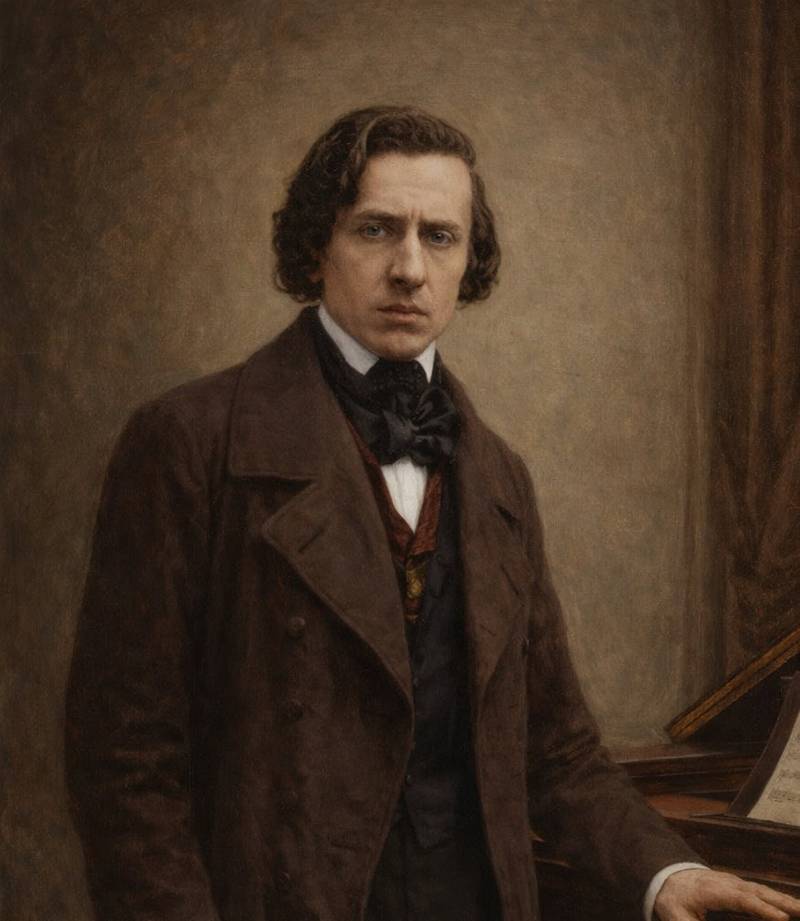
• IMAGEN DE FREDERIC CHOPIN JUNTO A UN PIANO. OBRAS COMPLETAS DE FREDERIC CHOPIN.

    COMPLETE WORKS OF FRÉDÉRIC CHOPIN

    Op. 1 – Rondo in C minor, for piano
    Op. 2 – Variations on “Là ci darem la mano” (Mozart), for piano and orchestra
    Op. 3 – Introduction and Polonaise brillante in C major, for cello and piano
    Op. 4 – Piano Sonata No. 1 in C minor
    Op. 5 – Rondo à la mazur in F major, for piano
    Op. 6 – Mazurkas (4), for piano
    Op. 7 – Mazurkas (5), for piano
    Op. 8 – Piano Trio in G minor, for piano, violin, and cello
    Op. 9 – Nocturnes (3), for piano
    Op. 10 – Études (12), for piano
    Op. 11 – Piano Concerto No. 1 in E minor
    Op. 12 – Brilliant Variations on a theme by Herold, for piano
    Op. 13 – Grand Polonaise brillante in E-flat major, for piano and orchestra
    Op. 14 – Rondo à la Krakowiak in F major, for piano and orchestra
    Op. 15 – Nocturnes (3), for piano
    Op. 16 – Rondo in E-flat major, for piano
    Op. 17 – Mazurkas (4), for piano
    Op. 18 – Grande valse brillante in E-flat major, for piano
    Op. 19 – Bolero in A minor, for piano
    Op. 20 – Scherzo No. 1 in B minor, for piano
    Op. 21 – Piano Concerto No. 2 in F minor
    Op. 22 – Andante spianato and Grande Polonaise brillante in E-flat major, for piano and orchestra
    Op. 23 – Ballade No. 1 in G minor, for piano
    Op. 24 – Mazurkas (4), for piano
    Op. 25 – Études (12), for piano
    Op. 26 – Polonaises (2), for piano
    Op. 27 – Nocturnes (2), for piano
    Op. 28 – Preludes (24), for piano
    Op. 29 – Impromptu No. 1 in A-flat major, for piano
    Op. 30 – Mazurkas (4), for piano
    Op. 31 – Scherzo No. 2 in B-flat minor, for piano
    Op. 32 – Nocturnes (2), for piano
    Op. 33 – Mazurkas (4), for piano
    Op. 34 – Waltzes (3), for piano
    Op. 35 – Piano Sonata No. 2 in B-flat minor
    Op. 36 – Impromptu No. 2 in F-sharp major, for piano
    Op. 37 – Nocturnes (2), for piano
    Op. 38 – Ballade No. 2 in F major, for piano
    Op. 39 – Scherzo No. 3 in C-sharp minor, for piano
    Op. 40 – Polonaises (2), for piano
    Op. 41 – Mazurkas (4), for piano
    Op. 42 – Waltz in A-flat major, for piano
    Op. 43 – Tarantella in A-flat major, for piano
    Op. 44 – Polonaise in F-sharp minor, for piano
    Op. 45 – Prelude in C-sharp minor, for piano
    Op. 46 – Concert Allegro in A major, for piano
    Op. 47 – Ballade No. 3 in A-flat major, for piano
    Op. 48 – Nocturnes (2), for piano
    Op. 49 – Fantasy in F minor, for piano
    Op. 50 – Mazurkas (3), for piano
    Op. 51 – Impromptu No. 3 in G-flat major, for piano
    Op. 52 – Ballade No. 4 in F minor, for piano
    Op. 53 – Polonaise in A-flat major “Heroic,” for piano
    Op. 54 – Scherzo No. 4 in E major, for piano
    Op. 55 – Nocturnes (2), for piano
    Op. 56 – Mazurkas (3), for piano
    Op. 57 – Berceuse in D-flat major, for piano
    Op. 58 – Piano Sonata No. 3 in B minor
    Op. 59 – Mazurkas (3), for piano
    Op. 60 – Barcarolle in F-sharp major, for piano
    Op. 61 – Polonaise-Fantaisie in A-flat major, for piano
    Op. 62 – Nocturnes (2), for piano
    Op. 63 – Mazurkas (3), for piano
    Op. 64 – Waltzes (3), for piano
    Op. 65 – Sonata in G minor, for cello and piano

    Works Published Posthumously

    Op. 66 – Fantaisie-Impromptu in C-sharp minor, for piano
    Op. 67 – Mazurkas (4), for piano
    Op. 68 – Mazurkas (4), for piano
    Op. 69 – Waltzes (2), for piano
    Op. 70 – Waltzes (3), for piano
    Op. 71 – Nocturnes (3), for piano
    Op. 72 – Miscellaneous works for piano
    Op. 73 – Rondo in C major, for two pianos
    Op. 74 – Polish Songs (17–19), for voice and piano


    1. Polonaises (1817–1846)

    The polonaises were the first genre cultivated by Chopin and accompanied him throughout his entire creative life.

    • Historical origin: an aristocratic Polish dance documented since the late 15th century, associated with official ceremonies and national symbols.
    • Creative beginnings: Chopin wrote youthful polonaises from 1817, during his adolescence in Warsaw.
    • Evolution: from simple dance forms to monumental, heroic structures of great pianistic density.

    Representative polonaises: Op. 26, Op. 40, Op. 44, Op. 53, Op. 61.
    The Polonaise Op. 53 (1842) is an emblem of European Romantic nationalism.


    2. Mazurkas (1825–1849)

    The mazurkas form the most extensive and experimental core of Chopin’s output.

    • Origin: Polish rural dances transformed into urban artistic language.
    • Quantity: approximately 60–61 mazurkas.
    • Function: a highly sophisticated harmonic and rhythmic laboratory.

    Late mazurkas are essential for the study of rubato and musical microform.


    3. Waltzes (1829–1847)

    Chopin’s waltzes emerged in Parisian high-bourgeois salons.

    • Transformation from functional dance music to autonomous art form.
    • Alternation between public brilliance and poetic introspection.

    The Waltz Op. 64 No. 1 belongs to Chopin’s final editorial years.


    4. Nocturnes (1827–1846)

    Inspired by John Field, Chopin established the definitive model of the Romantic nocturne.

    • Cantabile melody
    • Rich harmony
    • Intense expressivity

    The Nocturne Op. 48 No. 1 stands out for its dramatic choral writing.


    5. Études (1829–1837)

    The études redefined the relationship between technique and musical art.

    • Original function: technical refinement.
    • Result: works of high artistic and expressive value.

    The Étude Op. 10 No. 12 is traditionally linked to the emotional context of exile after the Polish uprising.


    6. Preludes (1831–1839)

    The preludes represent the culmination of the Romantic miniature form.

    • 24 Preludes Op. 28, one in each major and minor key.
    • Composed partly during Chopin’s stay in Mallorca.

    In addition, Chopin wrote two complete independent preludes:

    • Prelude in C-sharp minor, Op. 45 (published during his lifetime).
    • Prelude in A-flat major, B.86 (published posthumously).

    ➡️ Total: 26 complete preludes.


    7. Ballades (1831–1842)

    The ballades introduce a large-scale narrative instrumental form.

    • Four ballades, published between 1835 and 1842.
    • The Ballade Op. 52 is considered a summit of pianistic Romanticism.

    8. Scherzos (1831–1843)

    The scherzos transform the Classical model into autonomous pianistic drama.

    • Extreme contrasts
    • High harmonic density
    • Exceptional technical demands.

    9. Piano Sonatas (1828–1844)

    Chopin composed three complete piano sonatas.

    • Op. 4 – formative stage
    • Op. 35 – includes the Funeral March
    • Op. 58 – mature synthesis

    The Funeral March became a universal cultural symbol.


    10. Piano Concertos (1829–1830)

    • Piano Concerto No. 1 Op. 11
    • Piano Concerto No. 2 Op. 21

    Written before definitive exile, with absolute pianistic dominance.


    11. Concertante and Chamber Works (1828–1846)

    An exceptional repertoire including:

    • Piano Trio Op. 8
    • Andante spianato and Grand Polonaise Op. 22
    • Cello Sonata Op. 65 (1846)

    12. Impromptus and Fantasies (1834–1846)

    Works of carefully controlled formal freedom:

    • Impromptus Op. 29, 36, and 51
    • Fantasy Op. 49
    • Fantaisie-Impromptu Op. 66

    13. Rondos and Variations (1825–1833)

    • Rondos Op. 1, 5, and 16
    • Variations Op. 2

    In 1831, Robert Schumann publicly praised the Variations Op. 2, propelling Chopin’s international fame.


    14. Polish Songs (1827–1847)

    • Op. 74: 17–19 songs
    • Published posthumously in 1857, edited by Julian Fontana
    • Language: Polish

    These songs establish a direct link between national poetry and musical lyricism.
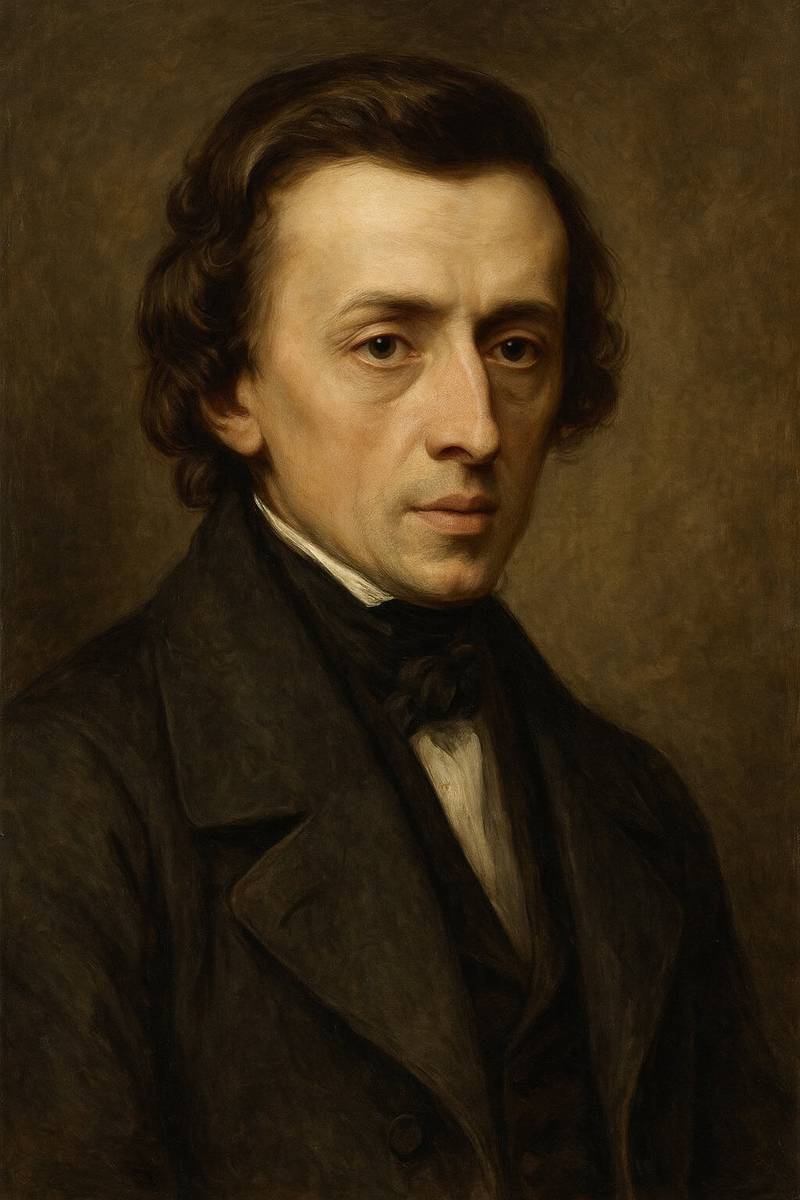
  • IMAGEN DE FREDERIC CHOPIN.

    FREDERIC CHOPIN (English)

    Frédéric Chopin was born on March 1, 1810, in Żelazowa Wola, near Warsaw, then part of the Duchy of Warsaw. He was a Polish composer and pianist whose work permanently transformed piano music. From early childhood, Frédéric Chopin displayed extraordinary musical sensitivity and intellectual refinement. His father, Nicolas Chopin, was a French-born educator, while his mother, Justyna Krzyżanowska, nurtured his first musical experiences. This cultivated family environment strongly shaped his artistic identity.

    By the age of seven, Chopin was already composing polonaises, and at eight, he appeared in public concerts. He studied composition with Józef Elsner at the Warsaw Conservatory, where his teacher described him as a musical genius. These formative years established Frédéric Chopin as a prodigious talent within Polish musical circles.

    Frédéric Chopin and the Political Climate of Poland

    The youth of Frédéric Chopin unfolded during political unrest in Poland under Russian control. In 1830, shortly before the November Uprising, Chopin left Warsaw. Although intended as a temporary journey, exile became permanent. This separation from his homeland deeply influenced his emotional world. Polish identity, nostalgia, and longing became defining elements of his music.

    In 1831, Frédéric Chopin settled in Paris, Europe’s cultural capital. There, he entered artistic circles that included Franz Liszt, Hector Berlioz, and Eugène Delacroix. However, Chopin avoided public virtuosity and cultivated a refined, introspective musical voice. His works reflected emotional depth rather than technical spectacle, aligning him with the core ideals of Romanticism.

    Frédéric Chopin: Musical Style and Piano Innovation

    The artistic language of Frédéric Chopin revolutionized piano composition. He wrote almost exclusively for the piano, transforming it into a vehicle of lyrical and psychological expression. His output includes Nocturnes, Études, Preludes, Ballades, Scherzi, Mazurkas, and Polonaises, each redefining expressive and technical boundaries.

    Frédéric Chopin introduced advanced harmonic language, subtle chromaticism, and innovative textures. Moreover, he developed a sophisticated use of rubato, allowing melodic freedom while preserving rhythmic structure. This approach demanded sensitivity rather than force. His pianistic writing influenced later composers, including Claude Debussy, Maurice Ravel, and Alexander Scriabin, securing his position as a cornerstone of piano literature.

    Frédéric Chopin and His Parisian Life

    In Paris, Frédéric Chopin earned his living primarily as a private piano teacher, composer, and salon musician. He preferred intimate performances over large concert halls, partly due to his reserved personality and fragile health. His refined manners and intellectual elegance made him highly respected among aristocratic patrons.

    Between 1838 and 1847, Chopin maintained a complex relationship with the writer George Sand. Their time together was both creatively productive and emotionally challenging. During the winter of 1838–1839, Chopin stayed in Mallorca, where he composed several major works, including the Preludes, Op. 28. Unfortunately, the damp climate worsened his illness. Tuberculosis increasingly limited his physical strength, affecting his productivity in later years.

    Frédéric Chopin: Final Years and Death

    During the 1840s, the health of Frédéric Chopin declined steadily. Nevertheless, he continued teaching and composing select works marked by introspection and restraint. In 1848, he undertook a demanding tour of England and Scotland, giving private concerts to aristocratic audiences. This journey severely weakened him.

    Frédéric Chopin died in Paris on October 17, 1849, at the age of 39. His funeral was held at the Church of the Madeleine, featuring music by Wolfgang Amadeus Mozart, as he had requested. In accordance with his wishes, his heart was transported to Warsaw, where it remains preserved as a national symbol.

    Historical Legacy of Frédéric Chopin

    The legacy of Frédéric Chopin remains central to Western musical history. His compositions embody the essence of Romanticism, merging poetic intimacy with technical sophistication. Every performance of his music demands emotional intelligence, stylistic awareness, and refined control.

    Today, Frédéric Chopin is universally regarded as one of the most influential composers of the nineteenth century. His piano works form a foundational part of the global repertoire and continue to inspire performers and audiences worldwide. His music transcends time, expressing personal emotion while achieving universal resonance, ensuring his enduring relevance across generations.

  • IMAGEN DE FREDERIC CHOPIN.

    FREDERIC CHOPIN

    Frédéric Chopin nació el 1 de marzo de 1810 en Żelazowa Wola, cerca de Varsovia, entonces parte del Ducado de Varsovia. Fue un compositor y pianista polaco que transformó profundamente la escritura para piano. Desde la infancia, Frédéric Chopin mostró un talento excepcional, unido a una sensibilidad artística poco común. Su padre, Nicolas Chopin, profesor de origen francés, y su madre, Justyna Krzyżanowska, fomentaron una educación intelectual y musical sólida. Este entorno familiar resultó decisivo para su desarrollo artístico temprano. Durante sus primeros años, Frédéric Chopin recibió formación formal en Varsovia y estudió composición con Józef Elsner, quien reconoció públicamente su genio creativo. A los 7 años ya componía polonesas, y a los 8 años ofrecía conciertos públicos, consolidando su reputación como niño prodigio en Polonia.

    Frédéric Chopin y el contexto histórico-político

    La juventud de Frédéric Chopin coincidió con un período de gran inestabilidad política en Polonia. En 1830, poco antes del Levantamiento de Noviembre contra el dominio ruso, abandonó Varsovia. Aunque nunca regresó a su patria, el exilio marcó de forma permanente su identidad artística. La nostalgia, el sentimiento nacional y la melancolía se convirtieron en rasgos expresivos esenciales de su lenguaje musical. En 1831, Frédéric Chopin se estableció definitivamente en París, uno de los centros culturales más influyentes de Europa. Allí entró en contacto con figuras como Franz Liszt, Hector Berlioz y Eugène Delacroix, aunque mantuvo siempre una estética íntima y personal, alejada del virtuosismo teatral dominante. Su música reflejó una profundidad emocional singular, propia del Romanticismo más introspectivo.

    Frédéric Chopin: estilo musical y aportes al piano

    El estilo de Frédéric Chopin redefinió las posibilidades técnicas y expresivas del piano. Compuso casi exclusivamente para este instrumento, elevándolo a un medio de expresión lírica, poética y psicológica sin precedentes. Obras como los Nocturnos, Estudios, Baladas, Scherzi, Mazurcas y Polonesas destacan por su originalidad armónica, su libertad formal y su refinamiento estilístico. Además, Frédéric Chopin revolucionó la técnica pianística mediante el uso avanzado del rubato, la independencia de las manos y una escritura idiomática profundamente natural. Su enfoque priorizó el canto melódico y la sutileza expresiva, influyendo decisivamente en compositores posteriores como Debussy, Ravel y Scriabin, quienes reconocieron su herencia estética.

    Frédéric Chopin y su vida personal en París

    En París, Frédéric Chopin desarrolló una vida profesional basada en la enseñanza privada, la composición y la participación en salones aristocráticos e intelectuales. Prefería estos espacios íntimos a los grandes auditorios, tanto por su carácter reservado como por su frágil salud. Entre 1838 y 1847, mantuvo una relación compleja con la escritora George Sand, quien influyó notablemente en su estabilidad emocional y producción artística. Durante el invierno de 1838–1839, Chopin residió en Mallorca, donde compuso parte de sus Preludios, Op. 28, una de sus obras más influyentes. Sin embargo, su estado de salud empeoró considerablemente, y la tuberculosis condicionó de forma progresiva su actividad creativa.

    Frédéric Chopin: últimos años y muerte

    Durante la década de 1840, la salud de Frédéric Chopin se deterioró de manera constante. A pesar de ello, continuó componiendo y enseñando, aunque con menor frecuencia. En 1848, realizó su último viaje a Inglaterra y Escocia, donde ofreció conciertos selectos que exigieron un esfuerzo físico significativo. Este viaje agravó su enfermedad. Finalmente, Frédéric Chopin falleció en París el 17 de octubre de 1849, a los 39 años. Su funeral tuvo lugar en la Iglesia de la Madeleine, con música de Mozart, cumpliendo su deseo expreso. Según su voluntad, su corazón fue trasladado a Varsovia, donde permanece como símbolo nacional.

    Legado histórico de Frédéric Chopin

    El legado de Frédéric Chopin sigue siendo fundamental en la historia de la música occidental. Su obra encarna la esencia del Romanticismo, combinando técnica refinada, profundidad emocional y elegancia formal. Cada interpretación de su música exige introspección, control técnico y sensibilidad estilística avanzada. Hoy, Frédéric Chopin es reconocido como uno de los compositores más influyentes del siglo XIX, y su repertorio continúa siendo un pilar central de la literatura pianística mundial. Su música trasciende el tiempo, conectando la experiencia íntima del compositor con una universalidad expresiva que garantiza su vigencia permanente.