




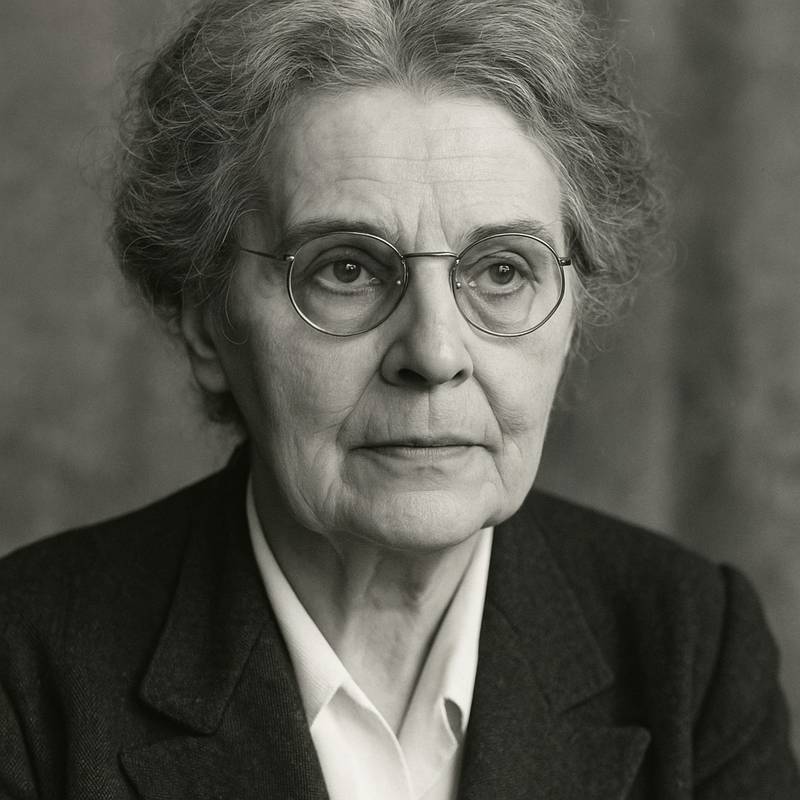
NADIA BOULANGER (English)
Nadia Boulanger stands as one of the most influential musical intellects of the twentieth century, shaping modern music through intellectual rigor rather than personal fame. Her career united artistic discipline, cultural leadership, and pedagogical clarity, allowing her influence to extend across continents, genres, and generations. As a composer, conductor, and pedagogue, she transformed musical understanding through structure, precision, and ethical responsibility, which secured her lasting authority in global musical education.
Nadia Boulanger: Early Life and Musical Formation
Nadia Boulanger was born on September 16, 1887, in Paris, France, into a family devoted to professional music. Her father, Ernest Boulanger, was a respected composer and Prix de Rome laureate, which created an intellectually rich environment. From an early age, Nadia Boulanger entered the Paris Conservatoire, where she studied harmony, counterpoint, organ, piano, and composition, while developing a strong analytical mindset that defined her lifelong approach. Her younger sister, Lili Boulanger, showed exceptional talent, and Nadia supported her career with deep dedication until Lili’s death in 1918, an event that permanently altered her artistic priorities.
Nadia Boulanger and Her Early Compositional Path
In her early professional years, Nadia Boulanger composed works for voice, piano, and orchestra, demonstrating clarity of form and refined expression. In 1908, she earned the Second Grand Prix de Rome, a significant achievement for a woman composer at that time. Although her compositional career began with promise, Nadia Boulanger gradually redirected her focus toward education, believing her greater contribution would emerge through teaching rather than personal authorship. Nevertheless, she remained deeply committed to promoting both historical and contemporary music.
Nadia Boulanger: Pedagogical Method and Teaching Philosophy
The historical importance of Nadia Boulanger rests primarily on her pedagogical legacy, which reshaped twentieth-century musical education. Her teaching emphasized discipline, clarity, and structural awareness, asserting that technique must serve musical truth instead of stylistic imitation. She taught at the Paris Conservatoire, the École Normale de Musique, and the American Conservatory of Fontainebleau, founded in 1921, where she adapted her instruction to each student’s strengths. Through this method, Nadia Boulanger profoundly influenced figures such as Aaron Copland, Leonard Bernstein, Philip Glass, Astor Piazzolla, Daniel Barenboim, and Igor Markevitch, extending her reach across classical, jazz, film, and popular music.
Nadia Boulanger as Conductor and Cultural Advocate
Beyond the classroom, Nadia Boulanger emerged as a pioneering conductor who challenged entrenched gender barriers. In 1938, she conducted the London Philharmonic Orchestra, followed by appearances with the Boston Symphony Orchestra and the New York Philharmonic. These achievements affirmed her international authority while expanding opportunities for women in major musical institutions. Simultaneously, Nadia Boulanger acted as a tireless cultural advocate, promoting early music, contemporary composers, and especially the work of her sister Lili, whose reputation she elevated worldwide.
Nadia Boulanger: Legacy and Intellectual Impact
Nadia Boulanger continued teaching with unwavering intellectual energy well into old age, emphasizing ethical responsibility, historical awareness, and expressive honesty. She died on October 22, 1979, in Paris, at the age of ninety-two, yet her influence endures. Today, her pedagogical principles define conservatory standards across the world. Widely recognized as “the teacher of teachers,” Nadia Boulanger successfully united tradition and modernity with unmatched authority, leaving a legacy that continues to guide composers, conductors, and musical thinkers across generations.
