




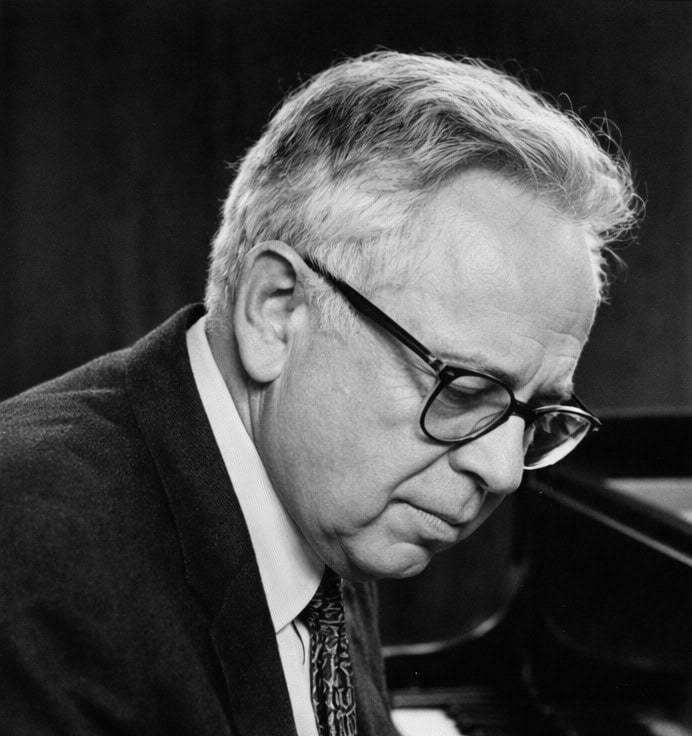
GARY GRAFFMAN (English)
GARY GRAFFMAN (October 14, 1928 – December 27, 2025) was an American classical pianist, pedagogue, and historically significant music administrator. He was born in New York City, and from early childhood he displayed exceptional pianistic talent. GARY GRAFFMAN built a career defined by technical rigor, structural clarity, and a demanding approach to musical texts. His figure embodies virtuosity, resilience, and an educational legacy that shaped classical music throughout the twentieth century and into the early twenty-first century.
Early Years and Education
From a very young age, GARY GRAFFMAN began a systematic musical education. He started playing the piano at the age of three and, at seven, entered the Curtis Institute of Music in 1936, where he studied with Isabelle Vengerova, a central figure in American piano pedagogy. He later completed studies at Columbia University between 1946 and 1948. This educational foundation established a solid technique and a rigorous interpretive discipline. As a result, his early artistic maturity anticipated a sustained international career.
International Career and Artistic Consolidation
GARY GRAFFMAN’s international recognition was firmly established in 1949, when he won the Leventritt Competition, a decisive turning point in his career. After graduating from Curtis in 1946, he made his professional debut as a soloist with Eugene Ormandy and the Philadelphia Orchestra. From that point forward, he maintained a consistent presence on major international concert stages. His style was distinguished by formal clarity and musical authority, qualities that sustained his reputation for decades.
Physical Challenge and Artistic Redefinition
In the late 1970s, GARY GRAFFMAN faced a neurological condition that affected his right hand and limited his ability to perform the standard two-hand repertoire. Nevertheless, he did not withdraw from musical life; instead, he redirected his artistic activity toward new interpretive possibilities. This period solidified his public image as a resilient musician, capable of transforming physical limitation into a means of artistic and professional continuity.
GARY GRAFFMAN as Pedagogue and Institutional Leader
Over time, GARY GRAFFMAN focused his work on teaching and academic leadership at the Curtis Institute of Music. He joined the piano faculty in 1980, was appointed director in 1986, and assumed the title of president in 1995, a position he held until 2006. His pedagogical approach emphasized musical independence, technical precision, and critical thinking, reinforcing Curtis’s role as a leading international training center.
Death and Documented Assessments
GARY GRAFFMAN died on December 27, 2025, at the age of ninety-seven, in New York City. Cultural and musical media reported his death, highlighting his dual legacy as both performer and teacher. Critical assessments consistently describe him as a decisive figure in modern piano education, particularly due to his institutional leadership and direct influence on internationally renowned soloists.
Historical Legacy of GARY GRAFFMAN
In summary, GARY GRAFFMAN left a verifiable and lasting imprint on classical music. His life illustrates the continuity between interpretive tradition, pedagogical innovation, and academic leadership. His legacy endures through recordings, archives, curricula, and above all, through the pianistic tradition transmitted to new generations.
Distinguished Students
The pedagogical influence of GARY GRAFFMAN is evident in the international careers of his students, documented as part of his teaching lineage. Among them are Lang Lang, Yuja Wang, Haochen Zhang, and Lydia Artymiw—names cited in biographical and institutional sources. These examples demonstrate the true scope of his impact, as several of his students now stand at the forefront of the global piano scene.
