




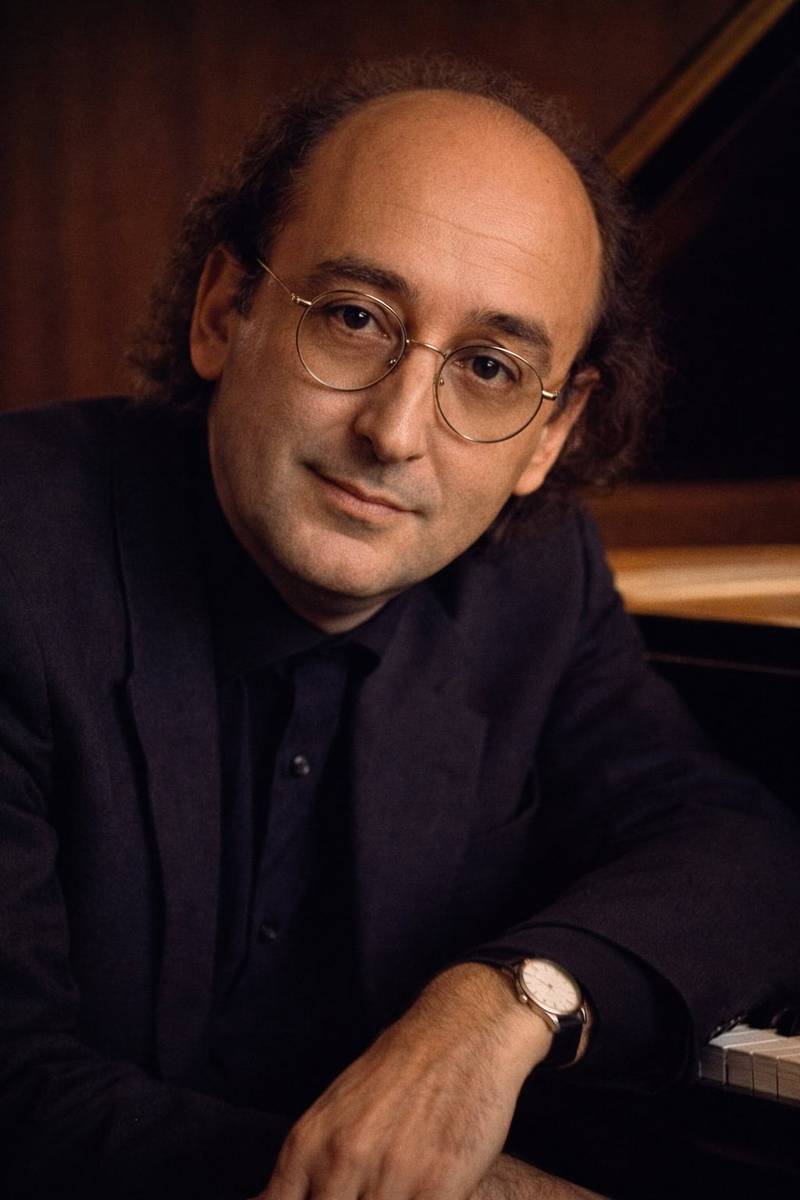
FRIEDRICH GULDA (English)
Friedrich Gulda was born on May 16, 1930, in Vienna, Austria, a city that stood as one of the principal centers of the European pianistic tradition. From early childhood, he displayed remarkable musical aptitude. His initial development belongs to the Viennese pianistic school, characterized by technical rigor, structural clarity, and stylistic fidelity to the classical repertoire.
Academic training of Friedrich Gulda
The academic training of Friedrich Gulda took place at the Vienna Academy of Music, a central institution in Austrian musical education during the twentieth century. There, he studied piano with Bruno Seidlhofer, one of the most influential teachers of his generation. During this period, he consolidated a technique grounded in sound control, rhythmic precision, and formal understanding of the musical text. His studies included systematic work on the repertoire of Johann Sebastian Bach, Wolfgang Amadeus Mozart, and Ludwig van Beethoven, historical pillars of his interpretative identity.
In 1946, Friedrich Gulda won first prize at the Geneva International Music Competition. This distinction marked the beginning of his international projection, confirming his artistic maturity at an early age and facilitating his entry into the European concert circuit.
International projection of Friedrich Gulda
The international projection of Friedrich Gulda was consolidated in the late 1940s and expanded throughout the 1950s and 1960s. He performed as a soloist with orchestras of recognized prestige and toured Europe and North America. His interpretations were praised for their structural clarity, technical precision, and respect for the musical text, qualities consistently highlighted by specialized critics.
During this period, he produced reference recordings of the classical repertoire, especially Beethoven’s piano sonatas and works by Mozart. These interpretations are distinguished by a balance between formal rigor and controlled interpretative freedom.
Stylistic openness
A historically significant aspect of Friedrich Gulda’s career was his sustained interest in jazz and improvisation, evident from the late 1950s onward. This activity developed alongside his classical career, without implying any abandonment of the academic repertoire. His involvement in jazz-related projects is documented through recordings and concert programs.
Friedrich Gulda maintained that improvisation was an integral part of the European musical tradition, an argument supported by the history of musical practice prior to the nineteenth century. He composed works that integrate classical forms with rhythmic and harmonic elements drawn from jazz, always maintaining a clear and recognizable formal organization.
Pedagogical activity and legacy of Friedrich Gulda
The pedagogical activity of Friedrich Gulda constitutes a central dimension of his historical legacy. He taught pianists who later achieved international prominence, among them Martha Argerich. His pedagogical approach emphasized structural understanding of the work, natural use of body weight, and conscious technical freedom, distancing itself from purely mechanistic methods.
Likewise, Friedrich Gulda advocated a conception of the performer as an integral musician, capable of understanding musical language beyond the literal reproduction of the text. This vision exerted a significant influence on pianistic pedagogy during the second half of the twentieth century.
Final years and death
In his later years, Friedrich Gulda reduced his regular concert activity, although he continued to participate in selective projects as a performer and composer. He died on January 27, 2000, in Weißenbach am Attersee, Austria. His death brought to a close an artistic career spanning more than five decades.
The legacy of Friedrich Gulda is defined by the integration of classical rigor, stylistic openness, and critical thought. Worldwide, he is recognized as one of the most influential pianistic figures of the twentieth century, not only for his technical excellence but also for having expanded the conceptual frameworks of pianistic interpretation.
