




FAMOUS OPERAS
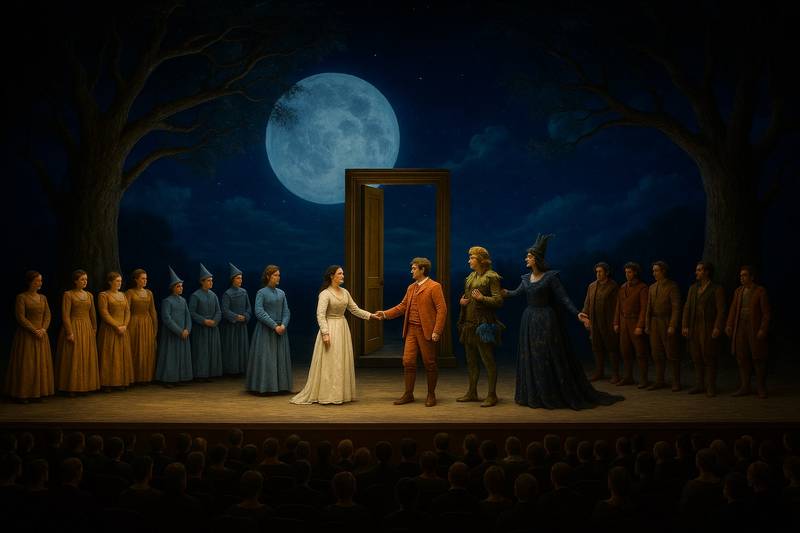
Famous Operas refer to works that achieved international recognition for their musical quality, dramatic power, and historical significance, becoming pillars of the Western operatic repertoire. This concept developed progressively from the seventeenth century, when opera emerged in Europe as an integrated theatrical genre combining music, drama, and poetry. In 1607, Claudio Monteverdi premiered L’Orfeo, a foundational work that established lasting narrative and expressive principles. Since then, Famous Operas have profoundly influenced Western culture and continue to be regularly performed in the world’s most important theaters. Each offers a unique balance between music, drama, and vocal expression, a defining trait of their historical endurance.
Cultural importance in the evolution of the genre
Famous Operas represent essential moments in the aesthetic and technical evolution of the operatic art, as they reflect social, philosophical, and artistic transformations across different historical periods. Moreover, they integrate musical traditions from the Baroque, Classical, Romantic, and Modern eras, demonstrating the genre’s adaptability. These works connect audiences with universal stories of love, tragedy, power, and destiny, while revealing music’s narrative capacity to express complex human conflicts. For this reason, Famous Operas constitute artistic documents of high cultural and educational value.
Famous Operas of the Baroque: expressive consolidation
Famous Operas of the Baroque developed approximately between 1600 and 1750, a period during which opera consolidated its expressive language. During this stage, recitatives, arias, and choruses were integrated into a clear and persuasive musical rhetoric. In 1689, Henry Purcell composed Dido and Aeneas, an early example of concentrated emotional intensity. Later, in 1724, Georg Friedrich Händel presented Giulio Cesare, a model of balance between vocal virtuosity and dramatic effectiveness. These works develop complex characters through ornamented vocal writing and structures that balance emotion with musical rhetoric.
Famous Operas of the Classical period: clarity and psychological depth
The Classical period, developed between 1750 and 1820, produced some of the most influential Famous Operas in history. During this era, opera achieved formal clarity and psychological depth. Wolfgang Amadeus Mozart transformed the genre through detailed human characterization and exemplary structural balance. In 1786, he premiered The Marriage of Figaro, a work combining social critique with refined lyricism. Subsequently, Don Giovanni (1787) and The Magic Flute (1791) expanded the philosophical and symbolic scope of opera. These works balance humor, drama, and moral reflection with highly expressive music.
Famous Operas of Romanticism: intensity and dramatic expansion
Famous Operas of the Romantic era dominated the operatic repertoire between 1820 and 1900, prioritizing emotion, individuality, and dramatic expansion. Giuseppe Verdi consolidated Italian musical drama with works such as Rigoletto(1851), La Traviata (1853), and Aida (1871), distinguished by memorable melodies and profound emotional tension. At the same time, Richard Wagner radically transformed opera with The Ring of the Nibelung, composed between 1848 and 1874, integrating leitmotifs and musical continuity. Likewise, Georges Bizet achieved worldwide fame with Carmen(1875), an opera combining dramatic realism and rhythmic vitality.
Famous Operas of Modernism: new sonic languages
At the end of the nineteenth century and the beginning of the twentieth, Famous Operas incorporated bolder harmonic languages and modern themes. Giacomo Puccini stood out with La Bohème (1896), Madama Butterfly (1904), and Turandot (1926), works recognized for their lyricism and direct dramatic sensitivity. Richard Strauss, in turn, made a decisive contribution to operatic modernism with Salome (1905) and Elektra (1909), exploring extreme emotions and complex orchestration. In this way, opera maintained its relevance through constant expressive innovation.
Reasons for the enduring impact
Famous Operas have endured for fundamental artistic and human reasons. First, they present universal narratives that connect with essential human experiences. Second, they develop profound characters through expressive and detailed vocal writing. In addition, the orchestra amplifies emotions and reinforces the dramatic dimension of each scene. Furthermore, these works inspire new productions, academic analysis, and contemporary reinterpretations, ensuring their historical continuity.
Famous Operas in today’s world: relevance and projection
Today, Famous Operas continue to attract diverse audiences worldwide, confirming their cultural relevance. International theaters employ new stage technologies to renew their visual and narrative impact. Moreover, digital platforms broadcast live performances from historic venues, expanding their global reach. Conservatories and universities study these works to understand stylistic evolution, vocal technique, and orchestral language. Therefore, Famous Operas remain living and universal pillars of musical heritage.
