




COMPACT TABLE OF THE FIVE SPECIES OF COUNTERPOINT
Explore an academic synthesis of the five species of Counterpoint, from the first species note against note, the foundation of strict style, to the florid counterpoint of the fifth species, which integrates all previous techniques. This table presents the essential definition, rhythmic relationship, regulated treatment of consonance and dissonance, dominant melodic motion, and pedagogical function of each species. It also situates each model within its relationship to historical practice, distinguishing between documented Renaissance procedures and their later didactic formalization.
| Type of Counterpoint | Essential Definition | Rhythmic Relationship | Treatment of Consonance and Dissonance | Dominant Melodic Motion | Primary Pedagogical Function | Relation to Historical Practice |
|---|---|---|---|---|---|---|
| First Species Counterpoint | Note-against-note writing over a fixed cantus firmus, within the strict pedagogical style. | 1 note against 1 note | Only perfect and imperfect consonances; dissonance excluded; strict prohibition of parallel fifths and octaves. | Predominance of contrary motion and stepwise motion; leaps are limited and properly compensated. | To internalize consonance, voice independence, and elementary intervallic control. | A pedagogical abstraction of procedures common in the sixteenth century; it does not appear as a literal exercise in the repertoire. |
| Second Species Counterpoint | Introduces regulated passing dissonance within the framework of strict style. | 2 notes against 1 note | Dissonance permitted only on metrically weak beats, by stepwise motion, with immediate resolution. | Predominantly stepwise motion; leaps are rare and strictly controlled. | To develop basic rhythmic perception and an initial understanding of tension and resolution. | Compatible with Renaissance practice, though systematically formalized for pedagogical purposes. |
| Third Species Counterpoint | Increases continuous rhythmic density while maintaining strict control of melodic discourse. | Common didactic model of 4 notes against 1, with historical variants. | Dissonances allowed only on weak beats, always as passing tones and with immediate resolution. | Almost exclusively stepwise motion; leaps are exceptional and always compensated. | To train continuous melodic fluency and advanced rhythmic control. | A pedagogical idealization; historical practice displays greater rhythmic flexibility. |
| Fourth Species Counterpoint | Introduces syncopation and suspension as forms of controlled structural dissonance. | Metric displacement through ties | Dissonance is prepared, sustained, and resolved by stepwise motion, according to strict rules. | Frequent use of oblique motion and rigorous rhythmic control. | To understand structural tension, musical rhetoric, and dissonant prolongation. | Directly based on documented historical procedures, especially in Renaissance vocal style. |
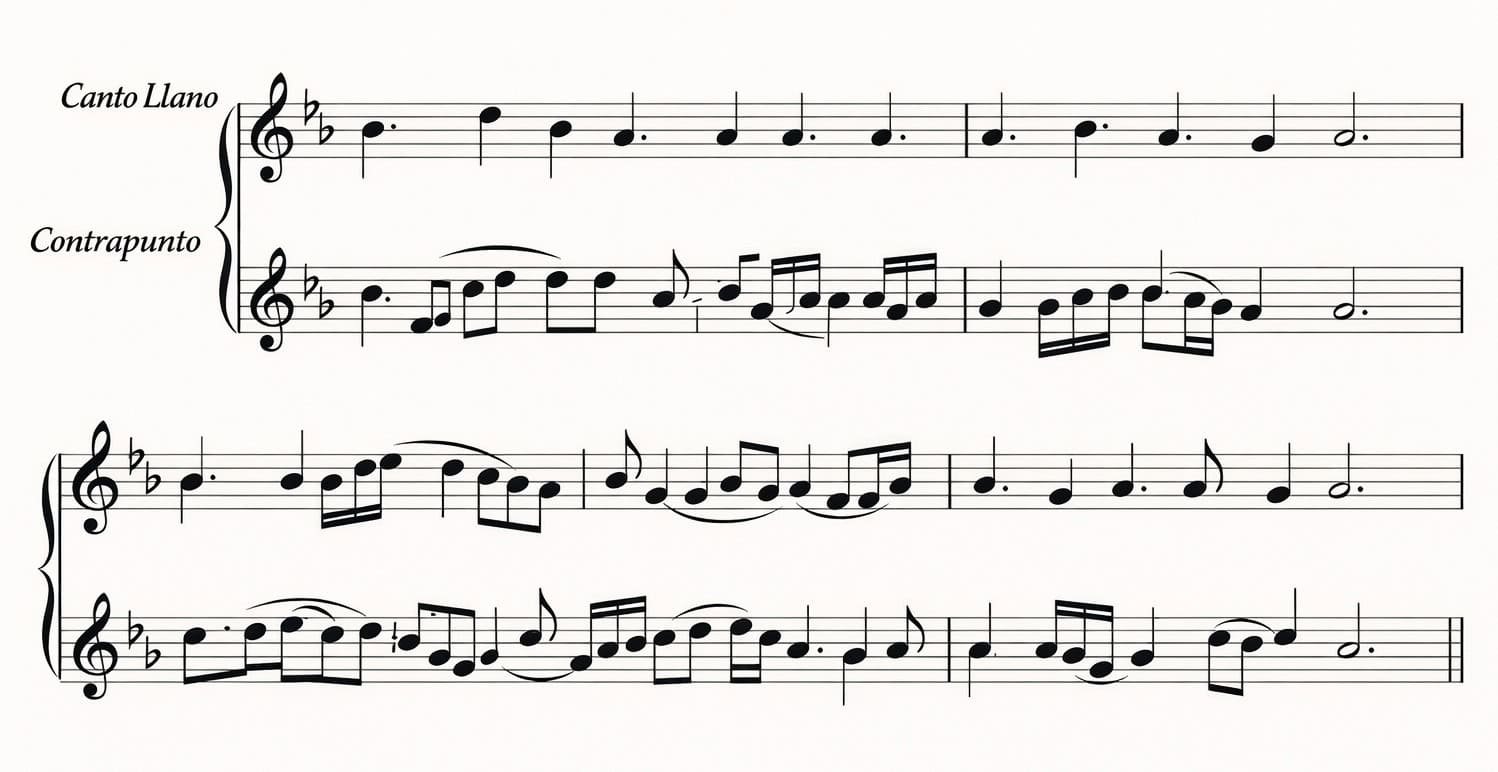
| Fifth Species Counterpoint | Mixed florid counterpoint that integrates all previous species into a unified discourse. | Mixed and flexible | Consonance and dissonance combined according to prior rules and subordinated to structural clarity. | Free but controlled motion, achieving overall technical balance. | Complete technical synthesis and preparation for larger contrapuntal forms. | The species closest to actual compositional practice, though formulated pedagogically. |
