




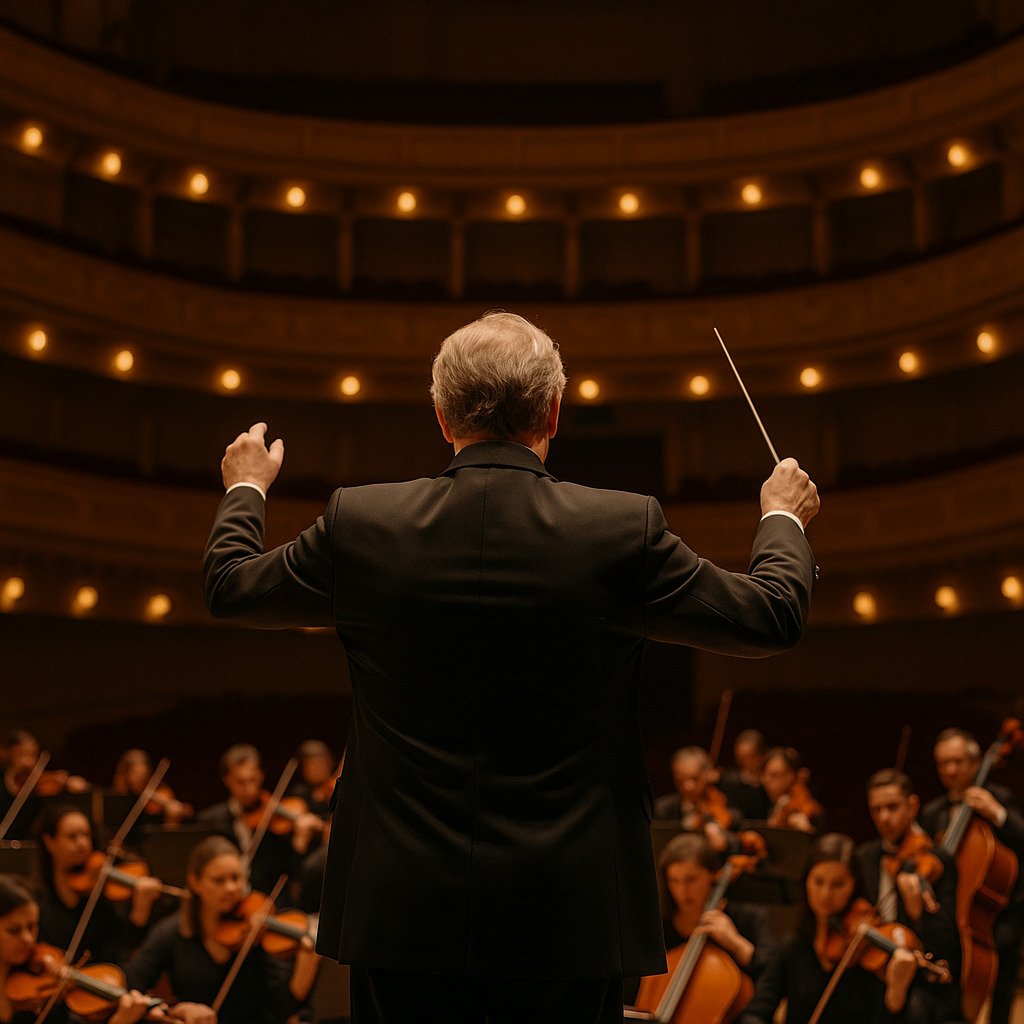
THE ORCHESTRAL CONDUCTOR
The figure of the Orchestral Conductor began to take clear shape around 1820, when growing orchestras required more specialized coordination. Although earlier ensembles had designated leaders, modern conducting emerged with the adoption of standardized batons around 1825. By 1840, conductors such as Mendelssohn had established clearer gestures and more precise techniques. Likewise, by 1880, conducting had gained professional status thanks to influential masters like Hans von Bülow. As a result, the conductor’s presence became essential in European concerts and later in American performance traditions.
Essential Functions of the Orchestral Conductor
The Orchestral Conductor coordinates musical ideas and oversees complex interpretations. They set tempos, cue entrances, and shape nuances. Additionally, they guide the overall aesthetic vision of a performance. Beginning in 1890, these functions became systematically taught in European conservatories. Their influence helped define interpretive styles that still endure. Consequently, their work ensures sonic cohesion through clear gestures and precise communication. Conductors also organize structured rehearsals, a practice formalized around 1900 in institutions led by prominent maestros.
Artistic Authority
The artistic authority of the Orchestral Conductor solidified around 1920, when conductors began dedicating themselves exclusively to leading ensembles. Their historical knowledge and technical expertise strengthened musical leadership within expanding orchestras. Moreover, their analytical training allowed them to solve interpretive challenges efficiently. From 1930 onward, their role broadened to include recording projects, which expanded the global reach of orchestral repertoire. Thus, conductors became decisive figures in shaping modern orchestral sound.
Communication and Gesture Technique in the Orchestral Conductor
The conducting technique evolved significantly with pedagogical advances around 1950. European schools developed more precise gestural methods. New approaches improved coordination and expressiveness, and major figures such as Karajan—whose influence spread from 1960 onward—redefined conducting standards. Consequently, a conductor’s movements became highly codified tools for shaping interpretation. This evolution ensured clarity even in contemporary works composed after 1970, often marked by complex rhythms and innovative textures.
Interpretive Responsibility and Emotional Leadership
Beginning in 1980, the conductor’s interpretive role became more introspective and emotionally driven. The Orchestral Conductor fostered collaborative environments that elevated artistic excellence. They also incorporated historical insights inspired by early-music research published around 1990. Likewise, their leadership introduced more dynamic rehearsal strategies, strengthening emotional connection among musicians. As a result, their guidance became essential for modern performances requiring precision and artistic sensitivity.
Cultural and Educational Impact of the Orchestral Conductor
The cultural impact of the Orchestral Conductor increased significantly after 2000, as orchestras worldwide launched community-based educational programs. Young conductors also began integrating digital technologies from 2010, expanding musical outreach. High-definition recordings introduced around 2015 further preserved performances with exceptional quality. Although each institution pursues different goals, the conductor promotes cultural continuity and audience development. Their work, therefore, keeps musical heritage alive across generations.
