



TREATISE ON COUNTERPOINT AND FUGUE (Parts 1 to 3)
Historical and Technical Analysis of Counterpoint: Definition, Musical Principles, Consonance and Dissonance, Medieval Origins, Notre Dame, and the Renaissance Ideal.
PARTS I, II, III
PART I – Historical, Technical, and Conceptual Definition of Counterpoint
I.1 Etymological and Historical Definition of Counterpoint
I.2 Counterpoint as a Musical Organizing Principle
I.3 Difference between Counterpoint, Harmony, and Polyphony
I.4 Counterpoint as Technique and as Discipline
I.5 Fundamental Terminology of Counterpoint
I.6 Concept of Independence of Voices
I.7 Horizontal and Vertical Relationship in Counterpoint
I.8 Consonance and Dissonance in Counterpoint
I.9 Structural Function of Melodic Motion
I.10 Intervallic Control in Counterpoint
I.11 Counterpoint as a Normative System
I.12 Aesthetic Scope of Counterpoint
I.13 Historical Limits of the Concept of Counterpoint
PART II – Medieval Origins of Counterpoint
II.1 Early Organum
II.2 Parallelism and Initial Restrictions
II.3 Free Organum and Discantus
II.4 Emergence of Rhythmic Independence
II.5 Primitive Control of Dissonances
II.6 Liturgical Function of Counterpoint
II.7 Early Modal Writing
II.8 Evolution toward Measured Polyphony
II.9 Notre Dame School
II.10 Léonin and Pérotin
II.11 Consolidation of Simultaneous Voices
II.12 Medieval Formal Stability
II.13 Projection toward the Renaissance
PART III – Counterpoint in the Renaissance
III.1 Musical Humanism and Textual Clarity
III.2 Modal Counterpoint
III.3 Strict Control of Dissonances
III.4 Predominance of Conjunct Motion
III.5 Balanced Melodic Treatment
III.6 Imitative Texture
III.7 The Renaissance Motet
III.8 Counterpoint in the Mass
III.9 Canon and Proportion
III.10 Horizontal Balance
III.11 Giovanni Pierluigi da Palestrina
III.12 Counterpoint as a Sonic Ideal
III.13 Renaissance Canon of Counterpoint
PARTS I, II, AND III
PART I – Historical, Technical, and Conceptual Definition of Counterpoint
I.1 Etymological and Historical Definition of Counterpoint
The term punctus contra punctum designates the writing of one musical line against another.
This expression belongs to Medieval Latin.
Counterpoint emerged as an empirical musical practice long before its theoretical codification.
I.2 Counterpoint as a Musical Organizing Principle
Counterpoint organizes music through melodic horizontality.
Each voice preserves autonomous identity.
Simultaneity is consciously regulated to ensure sonic coherence and perceptual clarity.
I.3 Difference between Counterpoint, Harmony, and Polyphony
Polyphony describes a sonic result.
Harmony analyzes vertical relationships.
Counterpoint defines a conscious method of linear construction.
I.4 Counterpoint as Technique and as Discipline
As a technique, counterpoint establishes rules governing intervals and motion.
As a discipline, it is transmitted through progressive exercises with verifiable auditory goals.
I.5 Fundamental Terminology of Counterpoint
Concepts such as consonance, dissonance, preparation, resolution, and motion structure the practice.
Terminology guarantees analytical precision and pedagogical stability.
I.6 Concept of Independence of Voices
Independence requires clearly distinguishable melodic lines.
Counterpoint avoids structural parallelisms.
The primary objective is perceptual clarity between simultaneous voices.
I.7 Horizontal and Vertical Relationship in Counterpoint
The horizontal dimension defines melodic continuity.
The vertical dimension evaluates simultaneous sonic coincidence.
Counterpoint balances both planes without subordinating line to chord.
I.8 Consonance and Dissonance in Counterpoint
Consonance produces relative stability.
Dissonance generates controlled tension.
Counterpoint regulates dissonance according to metrical position and clear resolution.
I.9 Structural Function of Melodic Motion
Conjunct motion predominates.
Leaps are compensated by contrary or stepwise motion.
This principle ensures singability, formal continuity, and structural stability.
I.10 Intervallic Control in Counterpoint
Every simultaneous interval is evaluated.
Counterpoint distinguishes between melodic and vertical intervals to avoid structural inconsistency.
I.11 Counterpoint as a Normative System
The normative system defines what is permitted and what is preferable.
Historical rules ensure stylistic coherence.
I.12 Aesthetic Scope of Counterpoint
The aesthetic scope includes balance, transparency, and gradual tension.
Counterpoint does not restrict expression; it consciously guides it.
I.13 Historical Limits of the Concept of Counterpoint
Meaning varies according to historical context.
Counterpoint may imply strict regulation or free interaction.
Analytical approaches must avoid anachronism.
PART II – Medieval Origins of Counterpoint
II.1 Early Organum
Organum is one of the earliest documented forms of Western polyphony.
It is described in ninth-century Carolingian theoretical treatises.
II.2 Parallelism and Initial Restrictions
Parallel motion facilitates coordination.
However, it produces modal instability.
Early restrictions emerge to preserve chant integrity.
II.3 Free Organum and Discantus
Free organum breaks constant parallelism.
Discantus coordinates rhythmic motion and increases contrapuntal flexibility.
II.4 Emergence of Rhythmic Independence
Rhythmic independence intensifies in Parisian repertories.
One voice sustains long notes while another develops differentiated activity.
II.5 Primitive Control of Dissonances
Early practice privileges stable consonant intervals.
Dissonances appear briefly and are justified by stepwise motion.
II.6 Liturgical Function of Counterpoint
Liturgy conditions form and duration.
Counterpoint embellishes chant without obscuring sacred text.
II.7 Early Modal Writing
Modal organization governs pitch hierarchy.
Counterpoint respects modal centers and structural degrees of plainchant.
II.8 Evolution toward Measured Polyphony
Measured polyphony requires rhythmic notation.
Rhythmic modes allow structural complexity and formal repetition.
II.9 Notre Dame School
The Notre Dame School, active between c. 1160 and 1250, consolidates complex polyphonic repertories in Paris.
II.10 Léonin and Pérotin
The testimony of Anonymous IV mentions Léonin and Pérotin.
Attributions remain partial and debated.
II.11 Consolidation of Simultaneous Voices
An increasing number of voices demands advanced coordination.
Counterpoint differentiates sustaining and ornamental functions.
II.12 Medieval Formal Stability
Genres such as organum and clausula stabilize musical forms.
Controlled repetition facilitates transmission and pedagogy.
II.13 Projection toward the Renaissance
Growing independence and refined dissonance control prepare Renaissance polyphony.
PART III – Counterpoint in the Renaissance
III.1 Musical Humanism and Textual Clarity
Humanism prioritizes textual intelligibility.
Counterpoint balances imitative density and textual clarity.
III.2 Modal Counterpoint
The modal system remains fully operative.
Counterpoint refines cadences and points of repose without functional tonality.
III.3 Strict Control of Dissonances
Dissonance appears as passing tone or suspension.
Clear preparation and resolution are mandatory.
III.4 Predominance of Conjunct Motion
Conjunct motion dominates melodic writing.
Leaps are compensated to ensure balance and singability.
III.5 Balanced Melodic Treatment
Each voice maintains a moderate tessitura.
Counterpoint avoids extremes to preserve natural fluency.
III.6 Imitative Texture
Imitation structures musical sections.
Counterpoint regulates entry interval and temporal distance.
III.7 The Renaissance Motet
The motet integrates sacred text and polyphony.
Counterpoint highlights key textual moments through imitation.
III.8 Counterpoint in the Mass
The polyphonic Mass achieves large-scale continuity.
Counterpoint combines imitation, cadence, and liturgical balance.
III.9 Canon and Proportion
Canon represents strict imitation.
It fulfills technical and symbolic functions under controlled conditions.
III.10 Horizontal Balance
Horizontal balance requires melodic autonomy in each voice.
Counterpoint avoids purely harmonic filler voices.
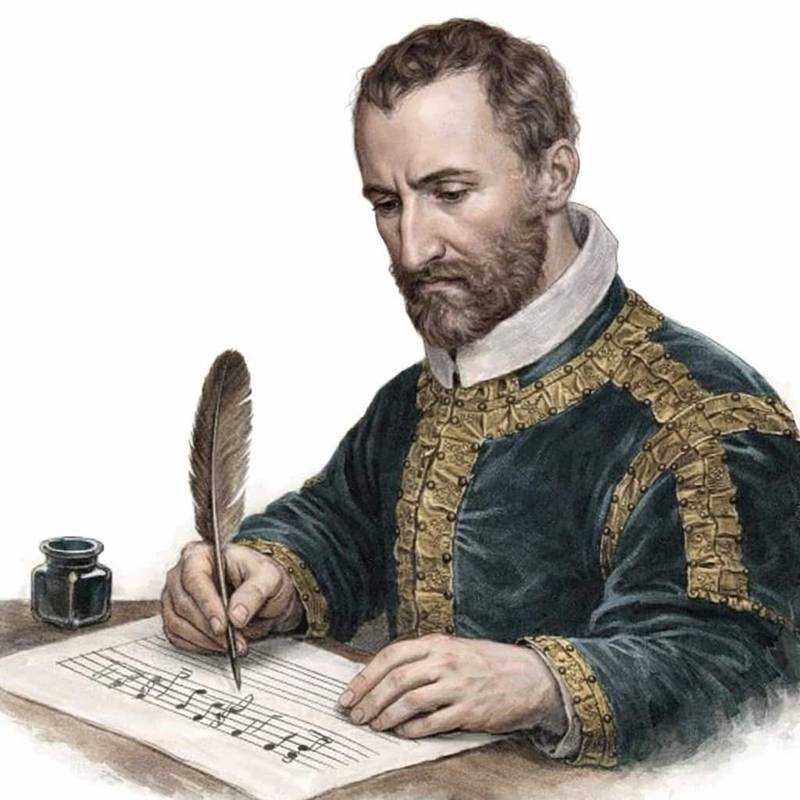
III.11 Giovanni Pierluigi da Palestrina
Giovanni Pierluigi da Palestrina (c. 1525–1594) embodies Roman polyphony.
His style became a central pedagogical model.
III.12 Counterpoint as a Sonic Ideal
The Renaissance ideal privileges clarity, balance, and transparency.
Counterpoint integrates dissonance without perceptual violence.
III.13 Renaissance Canon of Counterpoint
The Renaissance canon unites smooth voice leading, organized imitation, and strict control.
Together, these elements define a historical sonic ideal.
