




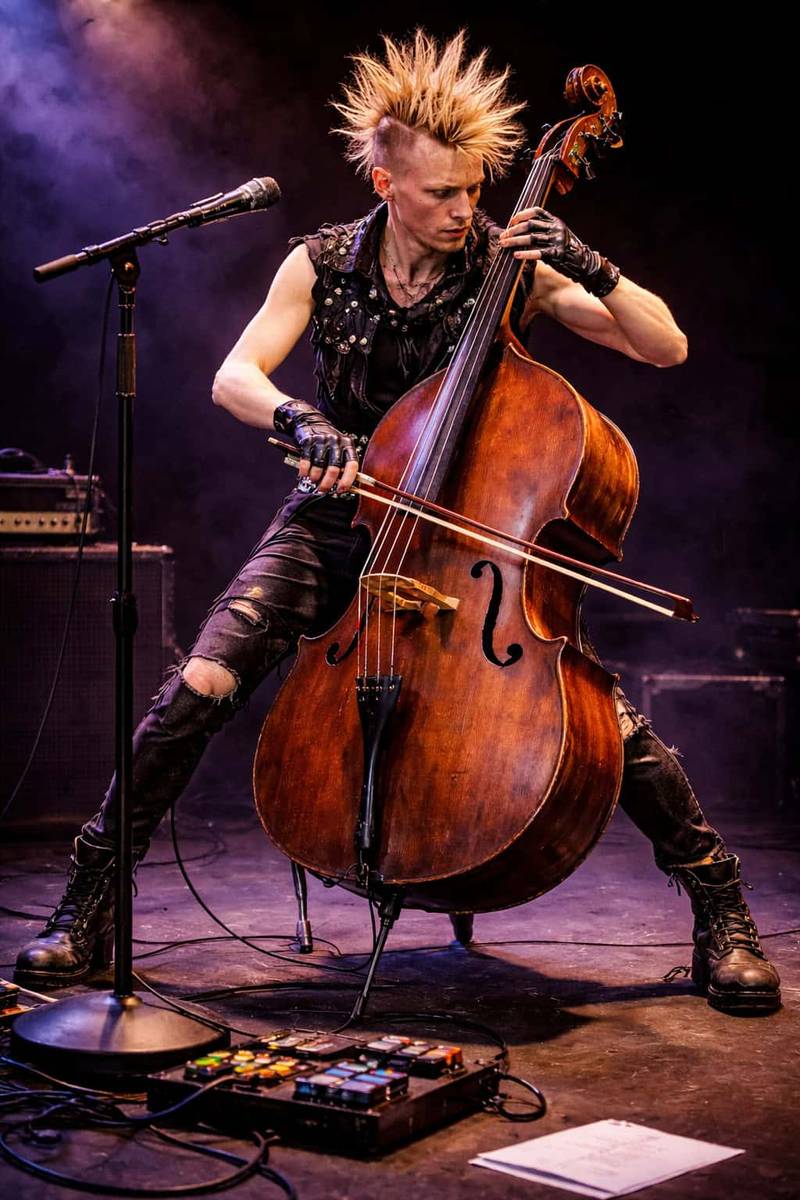
FUSION MUSIC
Fusion music is a form of musical creation that integrates different languages, techniques, and traditions within a single work. Its central feature is conscious hybridization, understood as a reflective and structural integration rather than a casual mixture. Unlike other genres, fusion music is not defined by fixed instrumentation or a closed aesthetic; instead, it is built through dialogue between cultures and styles. This condition explains its sustained development since the second half of the twentieth century, as well as its ability to adapt to different historical contexts. Moreover, fusion music reflects social, technological, and aesthetic changes, which requires a broad historical perspective that connects tradition and innovation without oversimplification.
Conscious Hybridization
The concept of conscious hybridization constitutes the core of fusion music. It does not involve layering styles in a decorative way, but rather articulating different musical languages within a coherent structure that considers form, harmony, rhythm, and timbre as an integrated system. Within this approach, each tradition preserves its identity while entering into active dialogue with others, generating new expressive possibilities. This principle allows fusion music to be understood as a creative process with internal logic and historical continuity, rather than as an arbitrary sum of influences.
Historical Origins of Fusion Music (1950–1960)
The emergence of fusion music can be situated between 1950 and 1960, mainly in the United States, when jazz musicians began incorporating ideas from European art music, especially in the harmonic and formal domains. In 1953, George Russell published The Lydian Chromatic Concept of Tonal Organization, a work that expanded modal thinking and challenged exclusive reliance on traditional tonality, exerting a decisive influence on modern jazz. This process found a clear artistic expression in 1959 with Kind of Blue, a work that consolidated a hybrid language combining jazz, modalism, and advanced formal thinking and laid a solid foundation for the development of fusion music.
Consolidation and Expansion (1960–1990)
During the 1960s and 1970s, fusion music achieved international visibility through the integration of jazz, rock, and new electric technologies. Bitches Brew, recorded in 1969 and released in 1970, introduced electric instrumentation, open structures, and complex rhythmic layering, while maintaining improvisation as a central expressive element. From 1975 onward, fusion music expanded into different cultural contexts. Works such as Romantic Warrior (1976) and Friday Night in San Francisco (1981) confirmed its intercultural dimension, demonstrating that effective fusion is based on structural integration rather than stylistic ornamentation.
Fusion Music in the Twenty-First Century
In the twenty-first century, fusion music is characterized by open and trans-stylistic hybridization. Jazz, electronic music, traditional musics, and contemporary languages coexist within flexible proposals, where sonic identity is not fixed but dynamic. In this context, fusion music functions as a creative space in constant transformation, allowing current works to be analyzed as historical continuations of earlier processes rather than as isolated phenomena.
Contemporary Comparative Cases of Fusion Music: “Berghain” and “El Novio (Mariachi Version)”
Within the current panorama, “Berghain” by Rosalía and “El Novio (mariachi version)” by Troker allow us to observe two complementary manifestations of contemporary fusion music, emerging from different cultural contexts yet united by the same structural principle.
“Berghain”, released on October 27, 2025, as a preview of the album Lux, integrates electronic production, demanding vocal writing, and orchestral resources within an experimental pop framework. Fusion is achieved through the joint organization of timbre, form, text, and visuality, with the voice functioning as the central expressive axis. The use of German, Spanish, and English is not decorative but structural, articulating different symbolic planes. In this case, fusion music operates as a synthesis of academic vocal tradition, pop language, and contemporary audiovisual aesthetics.
By contrast, “El Novio (mariachi version)”, released in 2024, is based on a previous work associated with urban jazz and reformulates it by positioning mariachi as the central timbral core. Here, fusion does not occur through the accumulation of styles, but through conscious cultural translation. The pulse, character, and musical gesture of the original piece remain recognizable, while traditional instrumentation redefines its sonic projection. This operation reveals a stable formal nucleus, capable of dialoguing with a deeply rooted tradition without losing identity.
Vertical and Horizontal Strategies of Contemporary Fusion Music
When compared, both works illustrate two complementary directions of current fusion music. “Berghain” exemplifies a vertical fusion, in which global languages are integrated within a unified aesthetic. “El Novio (mariachi version)” represents a horizontal fusion, in which the same musical material moves across specific cultural traditions. In both cases, conscious hybridization ensures coherence and expressive depth.
Fusion music reflects the cultural complexity of the contemporary world and challenges rigid genre categories. From Kind of Blue to “Berghain” and “El Novio (mariachi version)”, a continuous historical line can be observed, based on structural integration, cultural dialogue, and formal awareness. In short, fusion music is the result of more than six decades of musical evolution, and thanks to its capacity for adaptation, it continues to offer a fertile space for creation, reinterpretation, and artistic reflection in the present.
