




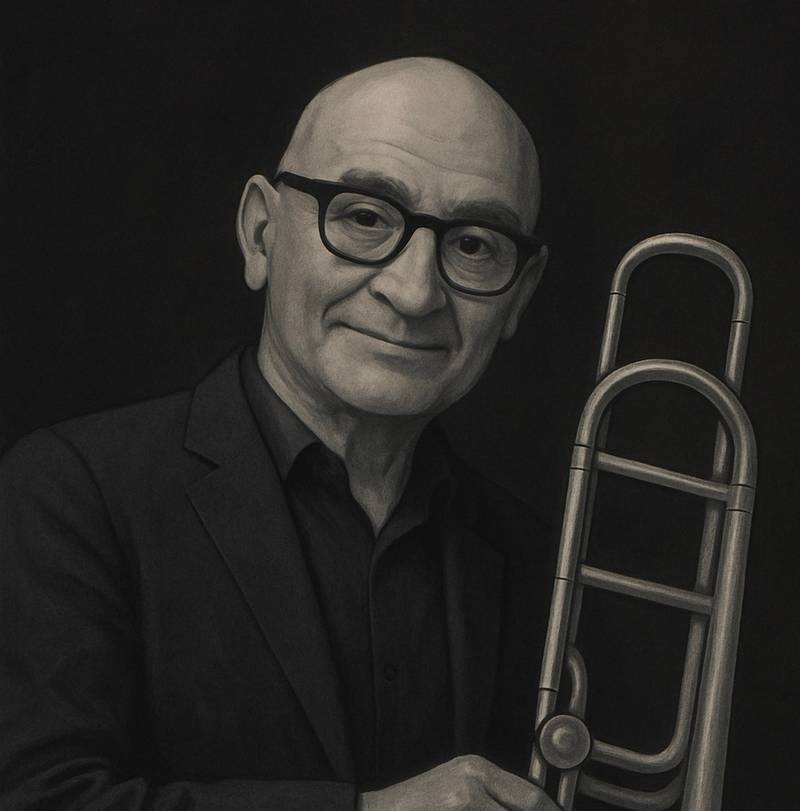
OSCAR DUDAMEL (English)
Gustavo Dudamel’s father is Óscar Dudamel. He was a trombonist and an active musician in Venezuela’s music scene, especially in Barquisimeto, in the state of Lara, a city known for its vibrant cultural and musical life during the second half of the twentieth century. He embodies the figure of the working professional musician, someone who builds a career through steady work, everyday performance, and the direct passing on of musical knowledge.
Musical background and activity
Óscar Dudamel developed his career mainly in popular and tropical music, standing out as a trombonist in various ensembles connected to Afro-Caribbean genres, particularly salsa. His work belonged to the circuit of orchestras and groups that played at parties, dances, and social events, where music fulfilled an essential social and communal role. His training was practical and self-taught, typical of many Latin American musicians of his generation: learning through oral tradition, hands-on experience on real stages, and functional mastery of the instrument within Afro-Caribbean rhythmic language.
Style and artistic influence
As a popular-music trombonist, Óscar Dudamel focused on strong rhythmic phrasing, a deep sense of groove and clave, teamwork within the brass section, and an understanding of music as an everyday, community-based craft. This outlook passed on to his son a fundamental idea: music as a living, non-elitist discipline, closely tied to the body, rhythm, and popular expression, where energy and direct communication are central.
Role in Gustavo Dudamel’s childhood
Óscar Dudamel was an early and direct influence on his son’s musical development. From a young age, Gustavo Dudamel grew up surrounded by instruments, listening to rehearsals, attending performances, and observing the daily reality of a professional musician.
Because of this environment, his contact with music came before formal academic training, which helps explain the natural sense of rhythm, physical energy, and expressive connection that define his conducting style today.
Relationship with El Sistema
Although Óscar Dudamel was not an academic conductor or composer, his experience as a musician helped his son enter Venezuela’s National System of Youth and Children’s Orchestras and Choirs (El Sistema) at an early age. There, Gustavo Dudamel began formal studies in violin and later in orchestral conducting. This combination was decisive: his father contributed popular music, rhythm, and practical musicianship; his mother, Solange Ramírez, contributed singing and pedagogy; and El Sistema provided academic structure, collective discipline, and symphonic projection.
Historical and symbolic importance
Óscar Dudamel represents a key figure in Latin American musical history: the popular musician who sustains tradition, the bridge between popular and academic worlds, and the cultural starting point of a symphonic figure with global reach.
Without his influence, it would be hard to understand the energy, spontaneity, and rhythmic drive that today set Gustavo Dudamel apart as one of the most charismatic and influential conductors on the contemporary music scene.
