




THE WELL-TEMPERED CLAVIER
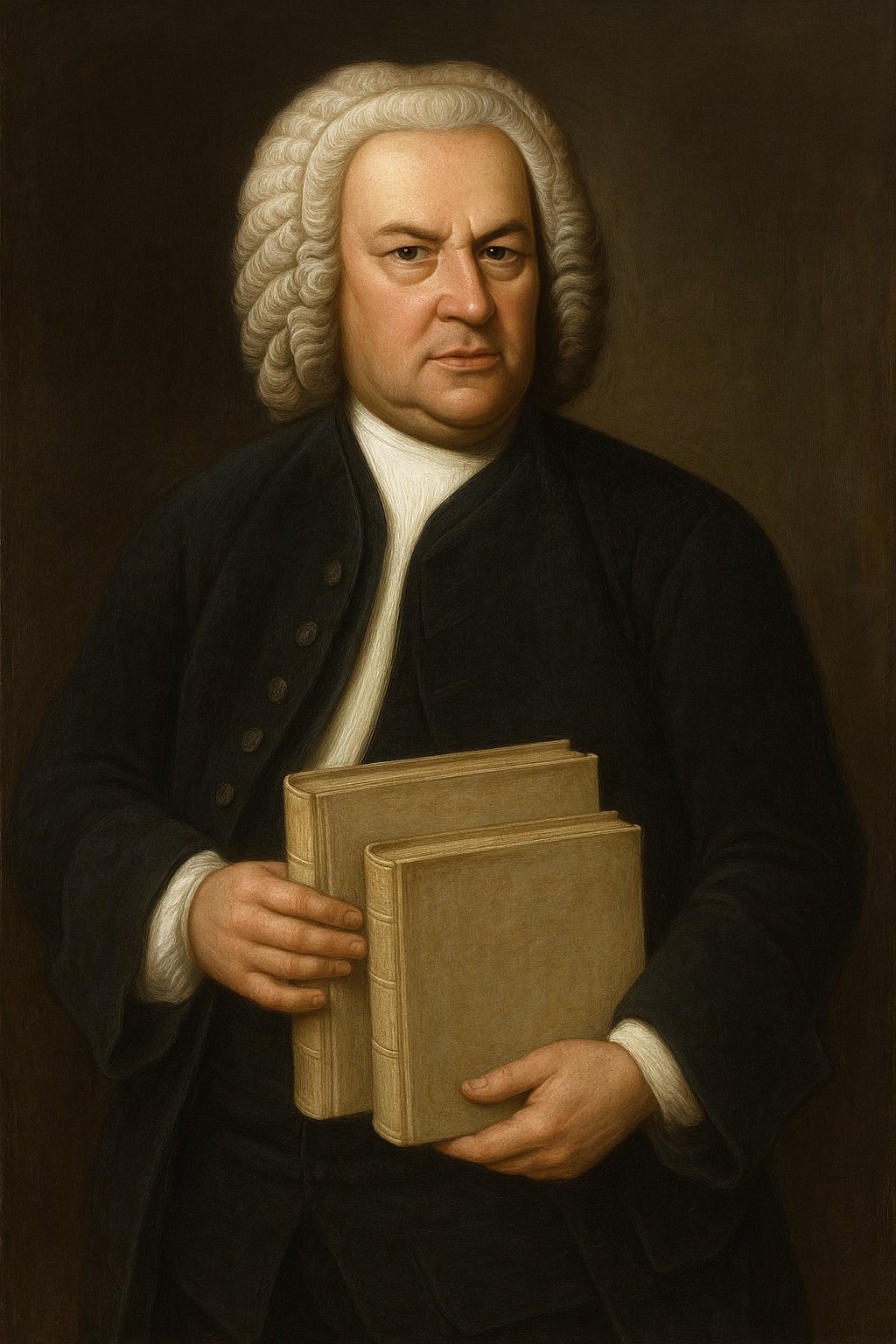
The Well-Tempered Clavier was composed by Johann Sebastian Bach (1685–1750) and completed in 1722 during his service in Köthen. A second volume appeared in 1742, reflecting Bach’s mature compositional language. This period belongs to the late Baroque era, defined by structural balance and expressive discipline. Therefore, the collection emerged at a moment of artistic consolidation. The principal goal of the well tempered clavier was to prove that a keyboard instrument could function convincingly in all major and minor keys. Thus, Bach addressed both theoretical limitations and practical musical needs, uniting pedagogy and artistry.
The Well-Tempered Clavier and Tuning Systems
The Well-Tempered Clavier and tuning systems remain inseparable in music history. Before the eighteenth century, most keyboards relied on unequal temperaments, restricting modulation. However, evolving tuning practices enabled broader harmonic freedom. Bach did not employ modern equal temperament. Instead, the well tempered clavier reflects a well-distributed temperament, preserving tonal color. Consequently, each key maintains a distinct expressive identity. This approach influenced keyboard construction and theoretical thought. As a result, the work established a practical foundation for tonal exploration.
Musical Architecture
The musical architecture of the well tempered clavier consists of forty-eight paired preludes and fugues, organized chromatically. Each book contains twenty-four keys, progressing by semitone. Accordingly, Bach constructed a complete tonal system. The preludes display diverse textures, rhythms, and characters, ranging from improvisatory gestures to dance-like patterns. In contrast, the fugues reveal strict contrapuntal design, employing imitation, inversion, augmentation, and stretto. Thus, the well tempered clavier balances expressive freedom with formal discipline, establishing an unparalleled contrapuntal model.
The Well-Tempered Clavier as a Pedagogical Model
The Well-Tempered Clavier as a pedagogical model was conceived for advanced musical training. Bach described the work as beneficial for “the profit and use of musical youth.” Moreover, he used it to teach his own sons. Each piece develops harmonic awareness, voice leading, and modulation control. Therefore, the well tempered clavier remains central to conservatory education worldwide. Pianists, organists, and theorists continue to rely on its progressive tonal design. Its enduring relevance confirms its exceptional instructional value.
Historical Influence
The historical influence of the well tempered clavier extends across centuries. Wolfgang Amadeus Mozart studied the work intensively during the 1780s, absorbing its contrapuntal clarity. Similarly, Ludwig van Beethoven regarded it as essential for compositional mastery. During the nineteenth century, Romantic composers admired its structural precision. In the twentieth century, Dmitri Shostakovich composed his own preludes and fugues in 1950, directly inspired by Bach. Thus, the well tempered clavier transcended stylistic boundaries and shaped Western tonal language.
Aesthetic Value and Enduring Legacy
Beyond technical mastery, the well tempered clavier possesses profound aesthetic depth. Each piece conveys a specific affect through economical musical means. Therefore, expression arises from structure rather than excess. Bach demonstrates that discipline enhances creativity, rather than restricting it. Consequently, the work continues to inspire performers and scholars. The well tempered clavier remains a benchmark of balance, intellectual rigor, and expressive clarity.
The well tempered clavier stands as a cornerstone of Western music history. Since 1722, it has shaped pedagogy, theory, and performance practice. Ultimately, its significance endures because it unites science, art, and education within a single coherent vision. Johann Sebastian Bach created not merely a collection, but a lasting musical philosophy.
