




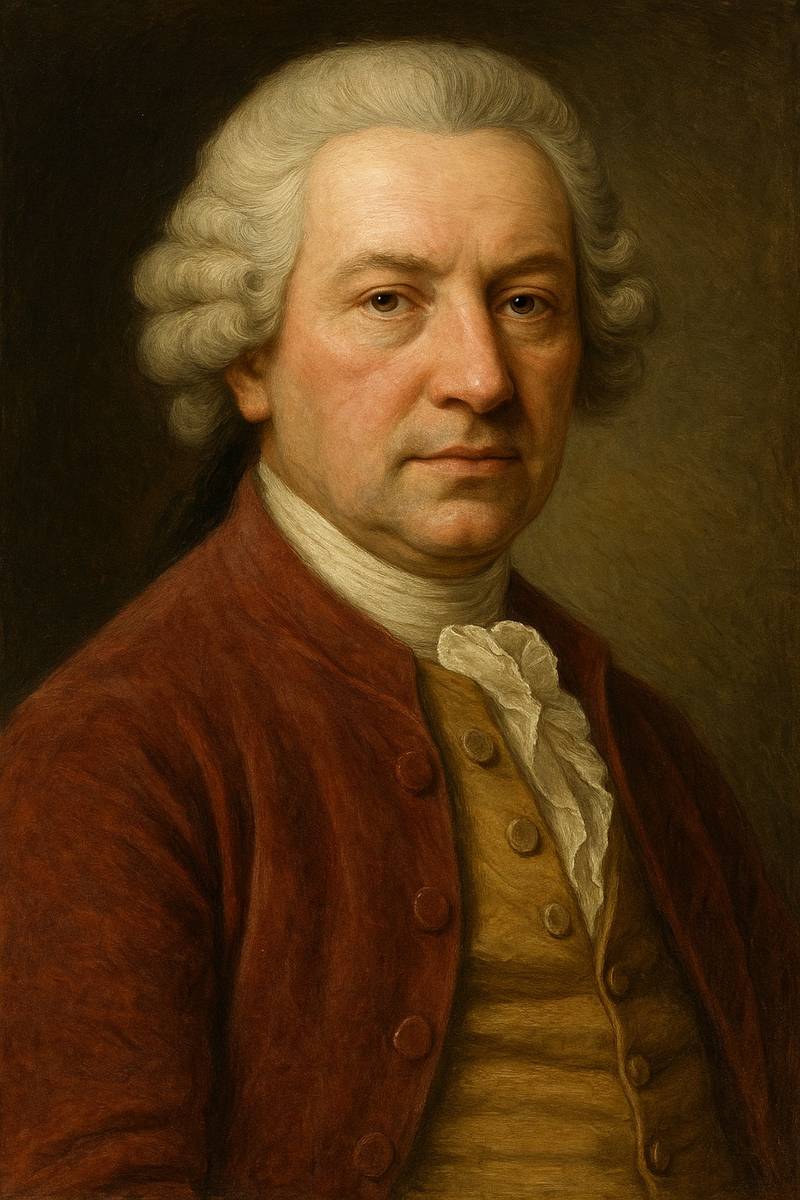
WILHELM FRIEDEMANN BACH (English)
WILHELM FRIEDEMANN BACH was born on November 22, 1710, in Weimar, into the distinguished musical household of Johann Sebastian Bach. From early childhood, WILHELM FRIEDEMANN BACH received intensive instruction in keyboard technique, counterpoint, and composition directly from his father. This education emphasized technical rigor, expressive clarity, and intellectual discipline, as evidenced by the Clavier-Büchlein written specifically for him. Consequently, his early formation blended strict Baroque tradition with emerging personal independence. In 1729, he enrolled at the University of Leipzig to study law and philosophy, which expanded his analytical thinking and influenced his musical approach. Nevertheless, music remained his principal vocation, guiding his professional development and artistic direction.
WILHELM FRIEDEMANN BACH : Professional Career and Musical Style
In 1733, WILHELM FRIEDEMANN BACH was appointed organist at the Church of St. Sophia in Dresden, a highly prestigious position. There, he gained admiration for his exceptional improvisational skill and expressive freedom. However, his independent temperament frequently conflicted with institutional discipline. Seeking greater autonomy, he accepted the organist post at the Liebfrauenkirche in Halle in 1746. During this period, he composed important sacred works and keyboard pieces. Stylistically, WILHELM FRIEDEMANN BACH combined Baroque contrapuntal mastery with the emerging Empfindsamer Stil, marked by emotional contrast, rhythmic flexibility, and bold harmonic exploration. His music often features unexpected modulations, signaling a transition toward early Classical aesthetics. Unlike his brother Carl Philipp Emanuel Bach, he rejected stylistic uniformity, favoring personal expression and originality.
WILHELM FRIEDEMANN BACH : Later Years and Historical Legacy
By the 1760s, WILHELM FRIEDEMANN BACH faced growing financial instability due to limited patronage and institutional conflict. In 1764, he resigned from his Halle position, choosing freelance work over permanent employment. This decision increased economic hardship and restricted professional opportunities. During his final years in Berlin, he supported himself through teaching, copying music, and occasional commissions. He died in poverty on July 1, 1784, largely forgotten by the public. Nevertheless, modern scholarship has reassessed his significance. His surviving works include keyboard sonatas, fugues, polonaises, and sacred cantatas, revealing structural sophistication and emotional unpredictability. Today, WILHELM FRIEDEMANN BACH is recognized as a vital stylistic bridge between Baroque complexity and early Classical expressiveness, valued for his artistic integrity, innovation, and resistance to convention within eighteenth-century music.
